
TL;DR:
- AI-driven assessments, remote formats, and soft skills are key components of modern tech interviews in 2026.
- Candidates must adapt by practicing platform-specific coding tasks, understanding AI evaluation methods, and enhancing soft skills.
- Success relies on self-assessment, deliberate practice, and leveraging tools like MeetAssist for real-time interview support.
Tech interviews have never moved this fast. Employers in 2026 are using AI-powered assessments, remote-first formats, automated coding platforms, and culture-fit evaluations all at once, creating a gauntlet that rewards preparation far more than raw talent. If you walked into an interview using last year’s playbook, you’d feel it immediately. The good news is that the candidates who understand these shifts don’t just survive them, they use them as leverage. This guide breaks down every major trend reshaping tech hiring right now, compares your options, and helps you decide exactly where to focus your energy.
Table of Contents
- AI-powered interviews take center stage
- Virtual-first and remote interview formats
- Comprehensive focus on soft skills and culture fit
- Real-time technical challenge platforms and automation
- Comparing top trends: Which approaches work best for you?
- Why trend awareness isn’t enough—what actually gets you hired in 2026
- Stay ahead with MeetAssist: Your smart interview partner
- Frequently asked questions
Key Takeaways
| Point | Details |
|---|---|
| AI dominates interviews | Artificial intelligence tools now shape most stages of tech interviews, affecting both assessment and feedback. |
| Remote formats standard | Remote and virtual interviews are the new norm, requiring job seekers to optimize their tech setup and privacy. |
| Soft skills matter | Demonstrating adaptability, communication, and culture fit is as important as technical ability in 2026 interviews. |
| Be trend-adaptive | Thriving in interviews depends more on how you adapt to trends than just knowing them. |
AI-powered interviews take center stage
Once you recognize the need to stay up-to-date, the next priority is understanding the growing role of AI in interviews. Artificial intelligence is no longer a background tool that hiring teams use quietly. It’s front and center in how candidates are screened, evaluated, and ranked.
AI is changing interview methods and candidate evaluation across technology fields in ways that were hard to imagine just a few years ago. AI systems now scan video responses for communication patterns, analyze code submissions for efficiency, and score written answers against trained models. The process is faster and often more consistent than human-only reviews.
Here’s what AI-driven interview stages typically cover:
- Automated resume parsing that matches your experience to role-specific criteria before a human ever reads your application
- Behavioral video analysis that measures tone, pacing, and word choice against role benchmarks
- Adaptive technical questions that adjust difficulty based on your previous answers in real time
- Coding assessments with automated test case evaluation and performance scoring
The upside is real. AI reduces scheduling friction, delivers results faster, and in theory removes some human biases. The downside is that these systems can feel opaque. You don’t always know what the algorithm is weighting, which makes it harder to calibrate your answers.
“The candidates who perform best in AI-assisted interviews treat the algorithm and the human reviewer as two different audiences, each needing a tailored approach.”
Pro Tip: When answering behavioral questions in AI-screened interviews, use the STAR method (Situation, Task, Action, Result) consistently. AI systems trained on structured responses score STAR-formatted answers higher. But keep your delivery conversational, since a human reviewer often sees the same recording.
Learning how AI interview tools and ethics work together gives you a genuine edge. And if you want a tactical approach, studying using AI for interview success will help you turn this trend into an advantage rather than a stressor.
Virtual-first and remote interview formats
Alongside the rise of AI, the format of interviews has shifted dramatically towards remote-first processes. If you’re expecting a conference room and a panel, think again. Most tech companies in 2026 run at least three of their interview stages fully online, and many complete the entire process without a single in-person meeting.
Strategies and tools for effectively managing remote interview processes are crucial in tech fields right now. The formats vary widely. You might face a live coding session on a shared editor, an asynchronous video response recorded on your own time, or a real-time panel call across three time zones. Each format demands a different kind of readiness.
Here’s a checklist to make sure your remote setup never costs you an opportunity:
- Test your internet connection at the same time of day as your scheduled interview
- Use a wired connection instead of Wi-Fi whenever possible
- Check your camera angle and lighting before the session, not during
- Clear your background or use a simple, professional virtual background
- Silence all desktop notifications and close unrelated tabs
- Have a backup device charged and ready in case your primary setup fails
Privacy is also worth thinking about carefully. Some platforms record sessions or analyze your environment. Reviewing interview privacy best practices before your next remote session helps you know your rights and protect your data. You can also explore customized remote interview strategies to adapt your approach depending on the company’s format.
Pro Tip: Always double-check your tech and background before logging in, because first impressions happen before you say a single word. Interviewers notice a cluttered space or a lagging connection immediately, and it colors their perception of your attention to detail.
Comprehensive focus on soft skills and culture fit
While technical abilities remain critical, companies now weigh soft skills and cultural alignment much more heavily. This isn’t a soft trend. Major tech employers have explicitly shifted hiring criteria to prioritize candidates who communicate well, adapt quickly, and integrate into distributed teams without friction.
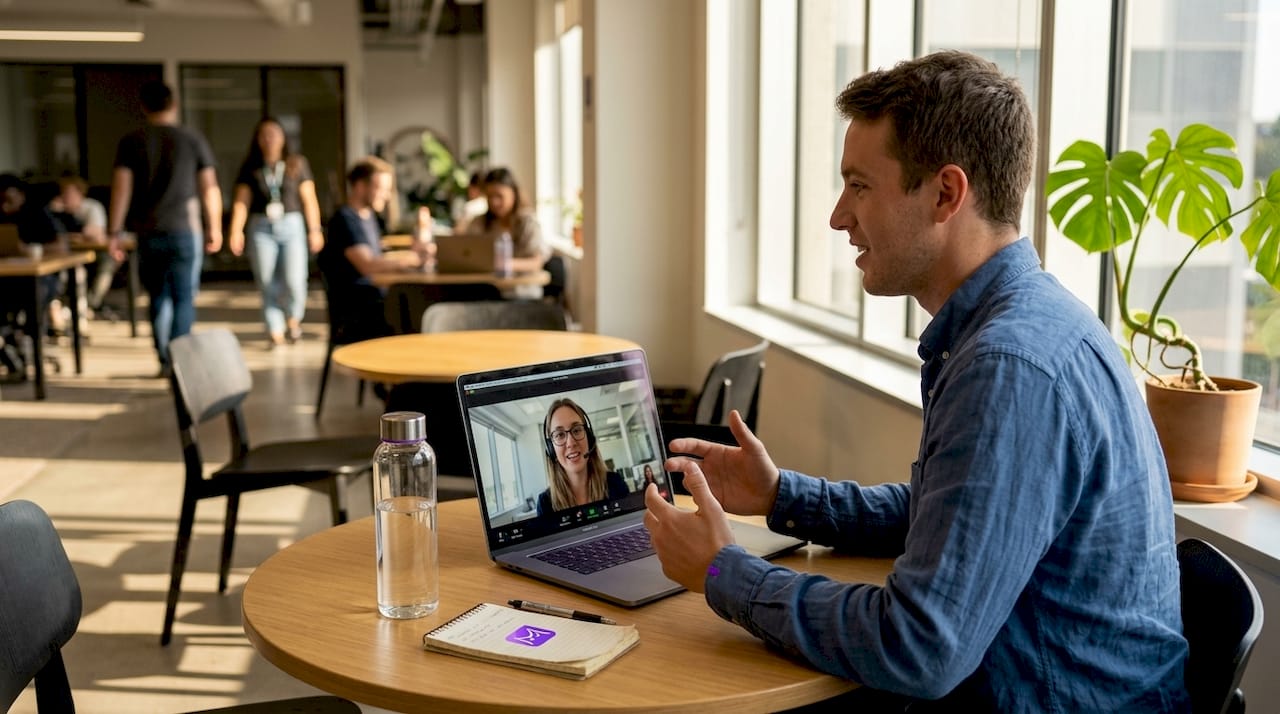
Soft skills are becoming more important in technology interviews, especially as remote work makes emotional intelligence and async communication harder to fake. Interviewers watch for active listening, self-awareness, and the ability to give and receive feedback gracefully.
Here’s what employers are actually watching for in 2026 culture-fit interviews:
- Adaptability: Can you describe a time you changed direction mid-project without blaming the team?
- Collaboration signals: Do you use “we” and “our” when describing wins, or only “I”?
- Communication clarity: Can you explain a technical decision to a non-technical stakeholder without condescending?
- Conflict resolution: Do your examples show accountability, or do they shift blame?
Sample culture-fit questions include: “Tell me about a time your team disagreed on an approach. What happened?” and “How do you stay productive when priorities shift unexpectedly?”
“Authenticity and self-awareness matter more than polished answers. Interviewers can sense when someone is performing a persona versus speaking from real experience.”
The strongest answers here are specific and honest. Vague answers about being “a team player” land flat. A short, concrete story about navigating a real conflict and what you learned from it lands much better. Review soft skills interview tips for frameworks that help you structure these answers without sounding rehearsed.
Real-time technical challenge platforms and automation
Not only are interviewers adapting what they test, but they’re also changing how they test with advanced automation and real-time challenges. The era of a whiteboard and a marker is largely over. In its place are sophisticated platforms that evaluate your code as you write it, track your thought process, and compare your performance against benchmarks.
AI and automation are streamlining and improving tech interview processes at every level. Here’s how the landscape has shifted:
| Feature | Old approach | 2026 approach |
|---|---|---|
| Code evaluation | Manual reviewer after session | Real-time automated test cases |
| Proctoring | Honor system or in-person only | AI-powered remote proctoring |
| Feedback | Days or weeks later | Instant or within hours |
| Challenge difficulty | Fixed for all candidates | Personalized based on performance |
| Collaboration testing | Rarely included | Pair programming sessions common |
Popular platforms you’ll likely encounter include CoderPad for collaborative live sessions, Codility for automated skill assessments, and HackerRank for structured technical challenges with leaderboard scoring. Each has its own interface quirks, so practicing on the actual platform beforehand is worth the time.
Here’s a step-by-step approach to prepare for platform-based challenges:
- Sign up for free tiers on CoderPad, HackerRank, and Codility to learn each interface
- Solve at least 10 problems per platform under timed conditions
- Practice narrating your thought process out loud while coding, since many live sessions expect this
- Review real-time interview automation to understand how AI proctoring systems work
- Focus on clean, readable code first, then optimize for performance
Comparing top trends: Which approaches work best for you?
With all these trends in mind, candidates need clarity on which strategies match their career path and role. Not every trend deserves equal attention from every candidate. Your focus should match your experience level, target role, and the kind of company culture you’re aiming for.
The use of AI and digital platforms is changing technology interviews at every experience level, and the right strategy depends on where you are in your career.
| Trend | Best for | Priority level | Key prep action |
|---|---|---|---|
| AI-powered assessments | All candidates | High | Practice STAR answers and structured responses |
| Remote-first formats | Distributed role seekers | High | Audit your tech setup and environment |
| Soft skills and culture fit | Mid to senior level | Medium to High | Prepare specific behavioral stories |
| Real-time coding platforms | Engineering roles | High | Build platform familiarity through practice |
Here’s how to decide what to focus on first:
- Early-career candidates: Prioritize technical platform practice and AI assessment readiness
- Mid-level engineers: Balance coding skills with strong behavioral and culture-fit preparation
- Senior or leadership roles: Shift more time toward communication, stakeholder stories, and culture alignment
- Remote-first job seekers: Lock down your setup and privacy practices before anything else
- Career changers: Double down on soft skills and transferable experience framing
Learning how to approach mastering interview trends as a system rather than a checklist is what separates candidates who consistently advance from those who keep getting stuck at the same stage.
Why trend awareness isn’t enough—what actually gets you hired in 2026
Now that you’ve seen what’s happening in tech interviews, let’s move beyond trends to what truly sets you apart. Here’s the uncomfortable reality: reading trend articles, including this one, is not preparation. It’s context. Plenty of candidates know exactly what’s coming in 2026 interviews and still freeze when the live session starts.
What actually moves the needle is honest self-assessment and deliberate iteration. After every interview, write down three things that felt off, not just what questions you missed, but how you communicated under pressure, whether you listened or just waited to talk, and where you relied on rehearsed answers instead of real thinking. That reflection habit compounds fast.
Adaptability isn’t a buzzword. It’s the ability to notice mid-interview that the format is different from what you prepared for and adjust without spiraling. Candidates who understand AI interview privacy essentials and the full landscape of modern hiring tools go in with fewer surprises.
Pro Tip: After each interview, score yourself on communication, adaptability, and honesty before you get any feedback. Your self-assessment accuracy improves your next performance faster than any trend guide.
Stay ahead with MeetAssist: Your smart interview partner
If you’re ready to act on these insights, there’s a way to leverage all these trends without having to manage them manually.
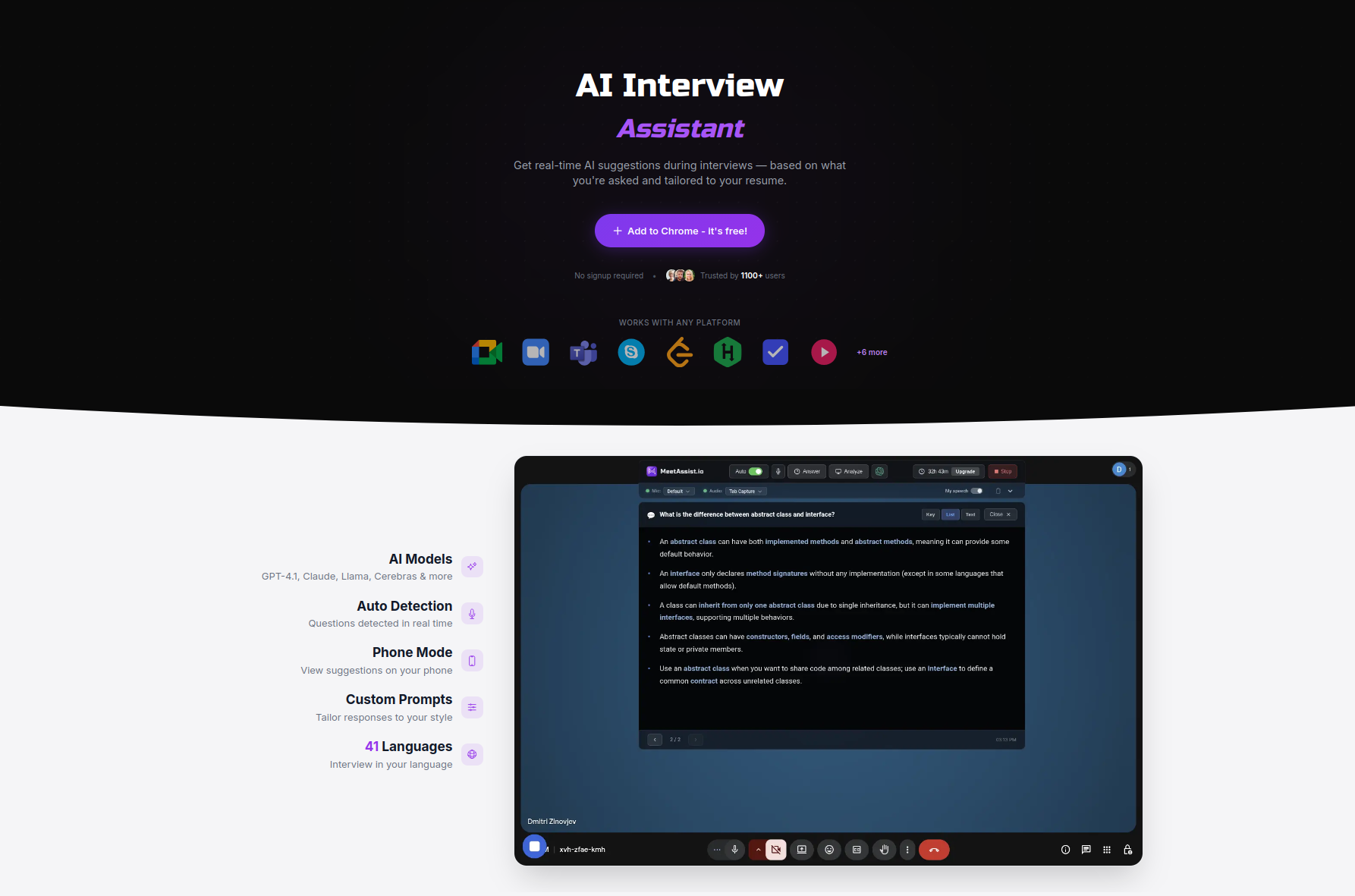
MeetAssist is a Chrome extension built specifically for this moment in tech hiring. It listens in real time during your Google Meet, Zoom, or Microsoft Teams interview and surfaces AI-powered answer suggestions tailored to your uploaded resume and preferred response style. Phone Mode makes the entire experience invisible on your screen, moving all suggestions to your phone after a QR scan. Whether you’re facing a behavioral round, a coding challenge, or an AI-screened assessment, the MeetAssist platform adapts with you. Explore AI interview assistant alternatives to find the right fit, or go straight to the coding assistant for interviews to sharpen your technical performance.
Frequently asked questions
How can I prepare for AI-assisted interviews in 2026?
Research the AI tools employers commonly use, then practice responses for both technical and behavioral questions using STAR structure. AI is changing how candidates are evaluated, so simulating these conditions beforehand is essential.
What interview platforms are most common in tech hiring now?
Popular platforms in 2026 include CoderPad, Codility, and HackerRank, alongside many custom company systems. AI and automation now power real-time proctoring and instant scoring on most of them.
How important are soft skills compared to technical skills in tech interviews?
Soft skills are becoming more important to the point where adaptability, communication, and culture fit now carry near-equal weight to coding ability in many tech hiring decisions.
Are remote interviews here to stay in 2026?
Yes. Remote and virtual interview formats are now standard across tech recruiting. Strategies and tools for managing them well are no longer optional, they are a baseline expectation for serious candidates.