

Remote technical interviews have evolved dramatically, and candidates who rely solely on technical knowledge often struggle. Research shows that AI-powered interview preparation can boost candidate confidence by 30% and improve response accuracy by 20%. The secret isn’t just knowing your algorithms or system design patterns. It’s about tailoring your preparation to match the specific demands of each interview format, company culture, and assessment style. Customized strategies that leverage AI tools help you identify weak spots, practice under realistic conditions, and refine your communication skills. This guide reveals how to build personalized interview prep plans that transform nervous candidates into confident performers during remote technical assessments.
Table of Contents
- Why Customized Interview Strategies Matter In 2026
- Core Components Of Effective Customized Interview Strategies
- Leveraging Ai Tools To Enhance Performance In Remote Technical Interviews
- Applying Customized Ai-Powered Strategies For Remote Interview Success
- Discover Meetassist: Your Ai Partner For Interview Success
- Frequently Asked Questions
Key takeaways
| Point | Details |
|---|---|
| AI practice boosts performance | Candidates using AI-powered prep show 30% higher confidence and 20% better accuracy in technical interviews. |
| Targeted preparation wins | Focusing on specific technical areas through customized plans increases success rates by 25% in assessments. |
| Modern methods outperform traditional | AI-driven interview simulations provide realistic practice that generic study materials cannot match. |
| Prep-maps align practice goals | Customized preparation plans map your practice sessions to company requirements and interview formats. |
Why customized interview strategies matter in 2026
The landscape of technical hiring has shifted dramatically over the past few years. Remote interview assistance has become essential as companies conduct most interviews through video platforms and online assessment tools. Standard preparation methods no longer cut it because they treat all interviews as identical, ignoring the nuanced differences between company cultures, technical stacks, and evaluation criteria.
Generic study plans focus heavily on memorizing algorithms and data structures. They overlook critical skills like articulating your thought process clearly, handling pressure during live coding sessions, and adapting your communication style to different interviewers. AI-powered interview tools provide tailored practice and feedback that addresses these gaps, simulating actual interview scenarios rather than abstract problem sets.
Customized preparation strategies dig into your specific weaknesses and the actual demands of your target roles. If you’re interviewing for a backend position at a fintech company, your prep should emphasize distributed systems and database optimization, not frontend frameworks. If behavioral rounds trip you up, you need structured practice using frameworks like STAR method, not more LeetCode grinding.
“The most successful candidates don’t just study harder. They study smarter by aligning their preparation with the exact skills and formats they’ll encounter during interviews.”
AI practice tools have revolutionized this approach by providing instant feedback on your responses, identifying patterns in your mistakes, and adjusting difficulty based on your performance. They simulate the pressure of real interviews, complete with time constraints and follow-up questions that force you to think on your feet. This targeted practice builds the muscle memory and confidence you need when stakes are high.
The key benefits of customized strategies include:
- Focused practice on your actual weak points rather than random problems
- Realistic simulation of company-specific interview formats and question styles
- Immediate feedback that helps you course-correct before bad habits solidify
- Confidence building through repeated exposure to scenarios you’ll actually face
Core components of effective customized interview strategies
Building a personalized interview preparation guides plan requires breaking down the process into manageable, targeted components. The most effective approach starts with thorough research and ends with systematic practice that addresses every dimension of the interview experience.
Your confident interview preparation steps should follow this structured approach:
- Research the target company’s tech stack, interview process, and cultural values
- Identify the specific skills tested in each interview round (coding, system design, behavioral)
- Assess your current proficiency in each required skill area
- Create a practice schedule that allocates time proportional to your gaps
- Use AI tools to simulate realistic interview conditions for each round type
- Review feedback and adjust your strategy based on performance trends
Skill tagging transforms vague preparation into focused practice sessions. Instead of randomly solving problems, you categorize each practice session by the specific competency it develops. Tag coding problems by data structure, algorithm type, and difficulty level. Label system design practice by architectural pattern and scale requirements. Mark behavioral questions by the competency they assess, such as conflict resolution or leadership.

| Skill Category | Practice Focus | AI Tool Application |
|---|---|---|
| Coding algorithms | Pattern recognition and optimization | AI generates similar problems with varying constraints |
| System design | Scalability and trade-off analysis | AI simulates interviewer follow-up questions |
| Behavioral responses | STAR method and storytelling | AI evaluates clarity and relevance of examples |
| Communication skills | Explaining complex concepts simply | AI assesses pace, clarity, and engagement |
Customizable interview responses become possible when you understand the specific evaluation criteria for each company. A startup might prioritize scrappy problem-solving and adaptability, while a large tech company emphasizes scalable solutions and best practices. Your practice should reflect these differences.
Pro Tip: Balance your preparation across all interview dimensions. Candidates often over-invest in coding practice while neglecting system design and behavioral rounds. Allocate at least 30% of your prep time to non-coding skills, as these often determine final hiring decisions when technical abilities are roughly equal among candidates.
AI tools excel at providing the variety and adaptability that static study materials lack. They generate new problem variations, adjust difficulty based on your performance, and simulate the dynamic nature of real interviews where follow-up questions probe your understanding. This creates a practice environment that mirrors actual interview pressure and unpredictability.
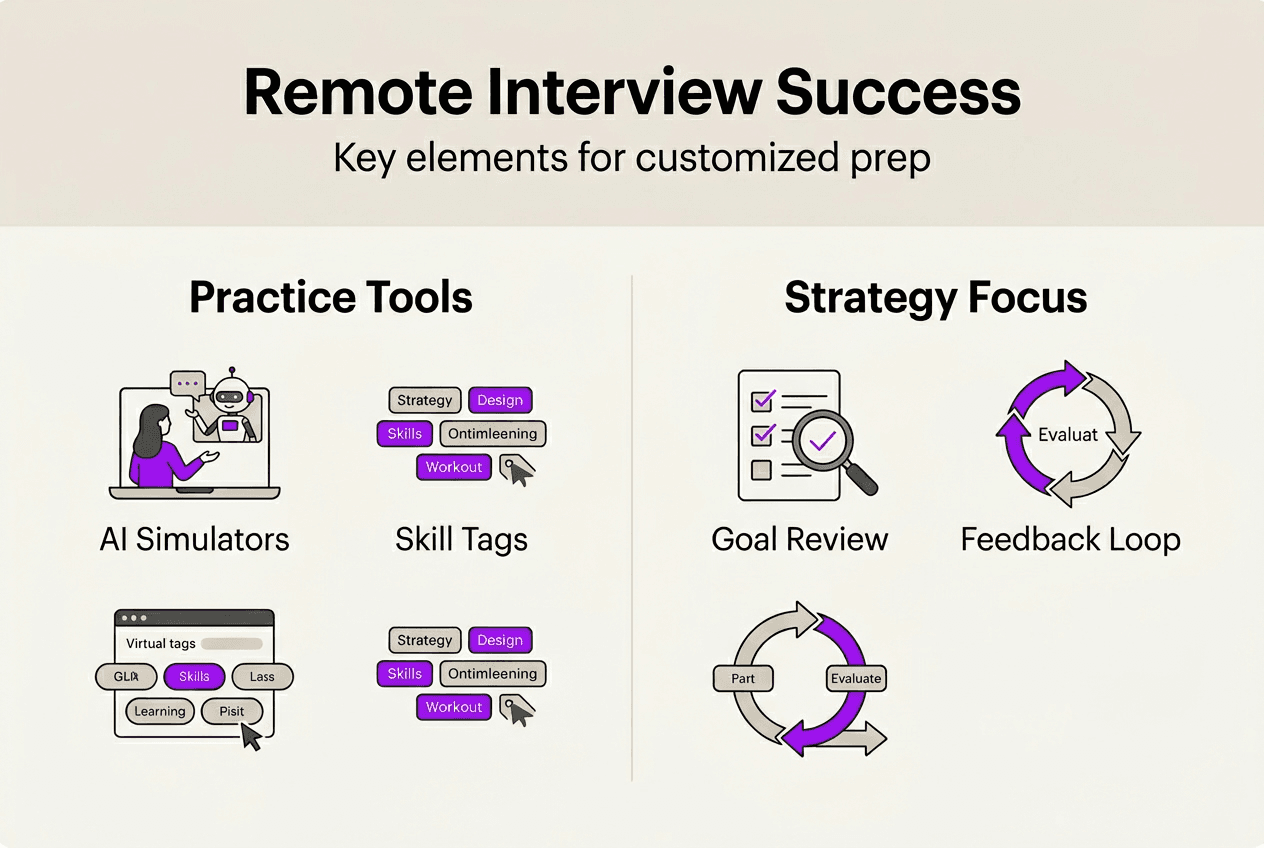
Leveraging AI tools to enhance performance in remote technical interviews
Artificial intelligence has transformed how candidates prepare for technical interviews, offering capabilities that traditional methods simply cannot match. Modern AI systems go far beyond simple question banks, creating immersive practice environments that adapt to your skill level and learning pace.
The current generation of AI interview tools includes chatbots that simulate interviewer dialogue, virtual reality avatars that provide realistic face-to-face practice, and mixed-reality systems that combine code editors with conversational AI. These technologies address the fundamental challenge of remote interviews: preparing for dynamic, unpredictable human interactions through solo practice.
Traditional preparation relies on static resources like books, video courses, and problem sets. You work through materials at your own pace without real-time feedback or adaptive difficulty. Technical interview automation has introduced AI systems that respond to your inputs, ask clarifying questions, and evaluate your performance using the same criteria as human interviewers.
| Preparation Method | Feedback Speed | Adaptability | Realism | Cost |
|---|---|---|---|---|
| Traditional study materials | None or delayed | Static content | Low | Low |
| Mock interviews with peers | Immediate but inconsistent | Limited by peer knowledge | Medium | Free |
| Professional coaching | High quality but scheduled | Personalized but manual | High | High |
| AI-powered simulation | Instant and consistent | Automatic difficulty adjustment | High | Medium |
Research demonstrates that candidates using AI prep show a 20% improvement in response accuracy and 30% boost in confidence compared to those relying solely on traditional methods. The difference comes from repeated exposure to realistic scenarios with immediate, actionable feedback that helps you correct mistakes before they become habits.
AI provides several types of valuable feedback that accelerate improvement:
- Technical accuracy assessment that identifies logical errors and inefficiencies in your solutions
- Communication quality evaluation that flags unclear explanations or excessive jargon
- Problem-solving approach analysis that reveals whether you’re asking the right clarifying questions
- Time management insights that show where you’re spending too long or rushing through steps
The impact extends beyond individual skill development. AI-assisted recruitment improves hiring accuracy by nearly 20% and reduces recruiter time by 44%, creating more efficient and fair evaluation processes. When you prepare using similar AI systems, you’re practicing with tools that mirror the actual assessment technology companies increasingly use.
Pro Tip: Use interconnected AI systems that address all interview stages rather than isolated tools for each skill. Platforms that combine coding practice, system design simulation, and behavioral question coaching provide comprehensive preparation that mirrors the multi-dimensional nature of real technical interviews. This integrated approach prevents gaps in your readiness.
AI interview assistance has become particularly valuable for remote assessments where you lack the in-person cues and energy of face-to-face meetings. AI tools help you develop the specific skills needed to perform well through video platforms, including maintaining eye contact with the camera, managing screen-sharing smoothly, and communicating clearly despite audio delays.
Applying customized AI-powered strategies for remote interview success
Understanding the theory behind customized preparation means little without practical application. The most successful candidates translate these concepts into concrete daily actions that systematically build their interview readiness.
Start by creating a realistic practice schedule that fits your available time and energy levels. Most candidates benefit from 60 to 90 minute practice sessions rather than marathon study days. Shorter, focused sessions with specific goals produce better retention and skill development than exhausting yourself with six-hour coding binges.
Your schedule should allocate time proportionally to your skill gaps and the interview format weightings. If system design comprises 40% of your target company’s evaluation and you’re weakest in that area, dedicate at least 40% of your practice time there. Interview answer customization requires understanding these weightings and adjusting accordingly.
Common mistakes that undermine even well-intentioned preparation efforts include:
- Ignoring behavioral interview guide preparation because it seems easier than technical rounds
- Over-relying on AI tools without developing independent problem-solving skills
- Practicing only your strengths because it feels more comfortable than confronting weaknesses
- Skipping mock interviews with real humans despite AI practice benefits
- Failing to research company-specific interview formats and adjusting generic prep
- Neglecting to review and learn from mistakes rather than just moving to the next problem
Interpreting AI feedback requires critical thinking rather than blind acceptance. When an AI system flags an issue with your approach, dig into why it matters. If it suggests a more efficient algorithm, understand the time and space complexity trade-offs. If it critiques your explanation clarity, identify the specific phrases or concepts that caused confusion. This active engagement with feedback accelerates learning far more than passively accepting suggestions.
Research shows that candidates who tailored preparation to specific areas had a 25% higher success rate in technical assessments compared to those using generic study plans. The difference lies in focused practice that addresses actual evaluation criteria rather than theoretical knowledge that may never be tested.
Key do’s and don’ts for remote technical interview preparation:
- Do test your technology setup before every interview to avoid technical glitches
- Do practice explaining your thinking out loud, even during solo coding sessions
- Do prepare questions about the role and team to demonstrate genuine interest
- Don’t memorize solutions without understanding underlying principles and trade-offs
- Don’t skip warm-up problems on interview day assuming you’re already ready
- Don’t forget to follow up with thank-you notes that reference specific conversation points
The most effective application of customized strategies involves continuous adjustment based on your progress. Review your performance weekly, identify patterns in your mistakes or struggles, and shift your practice focus accordingly. If you’re consistently strong in array manipulation but weak in graph algorithms, reduce array practice and increase graph problem volume. This dynamic approach prevents wasted effort on already-mastered skills.
Preparing for specific companies like Google requires understanding their unique interview philosophy and question styles. Google emphasizes scalable solutions and clean code, while startups might prioritize shipping working solutions quickly. Customize your practice to match these different evaluation lenses.
Discover MeetAssist: Your AI partner for interview success
After building your customized preparation strategy, you need tools that support execution during actual interviews. MeetAssist provides real-time AI assistance during remote technical interviews and assessments, helping you perform at your peak when it matters most.
The platform integrates seamlessly with Google Meet, Microsoft Teams, and other video platforms, listening to conversations and generating AI-powered answer suggestions in real time. You get instant support for coding challenges, system design questions, and behavioral scenarios without the interviewer knowing.
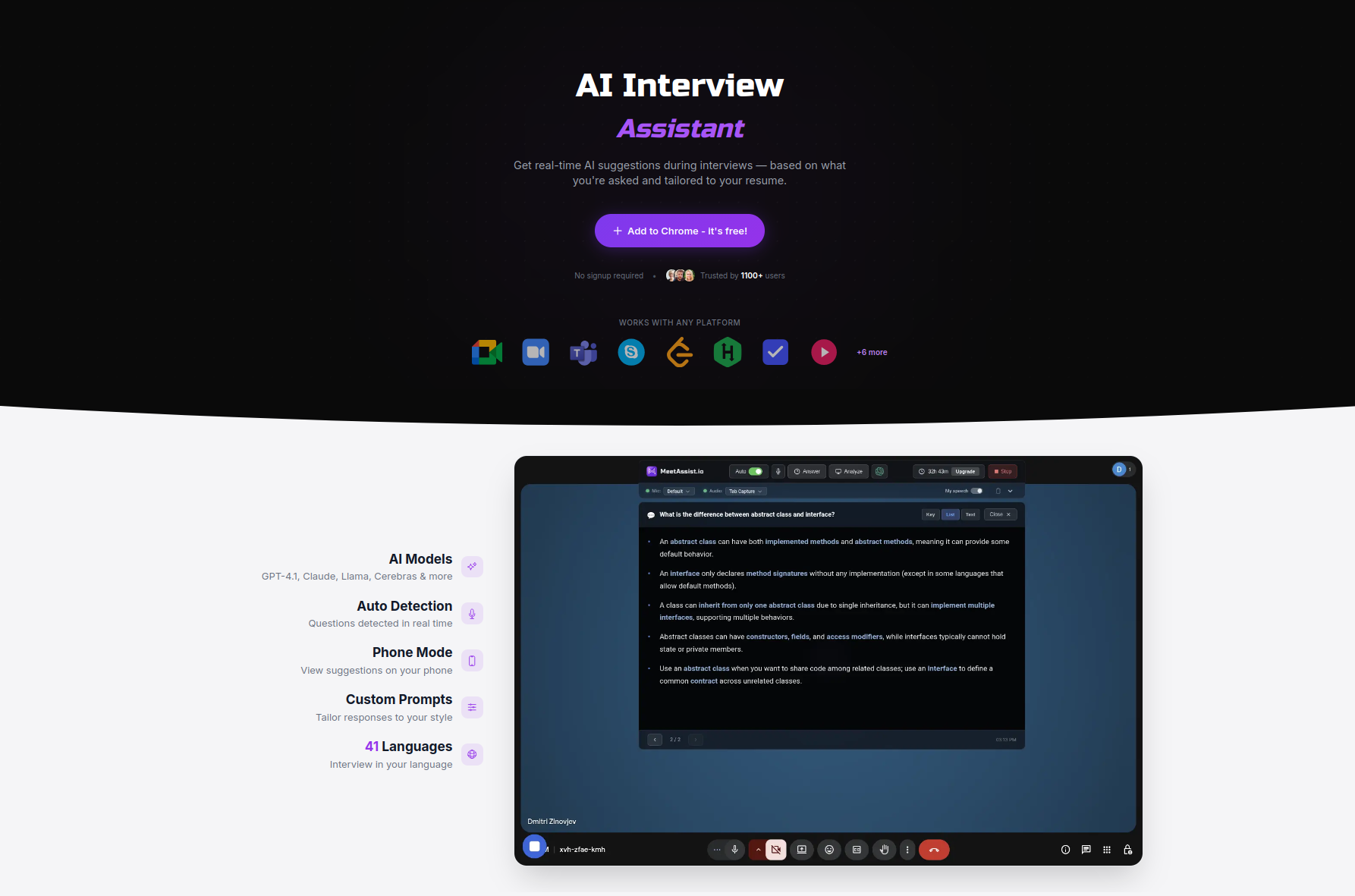
MeetAssist’s Phone Mode removes the extension from your computer screen entirely, syncing all transcripts and AI suggestions to your phone after scanning a QR code. This keeps your assistance completely invisible during the interview. You can even remotely capture and analyze any active Chrome tab from your phone, whether it’s a coding challenge or technical assessment.
The platform supports multiple AI models including GPT-4.1, Claude, Llama and Cerebras, with customizable answer styles from concise to detailed STAR method responses. Upload your resume for personalized suggestions that align with your actual experience. Learn how to use MeetAssist’s full feature set through detailed guides and tutorials.
Pro Tip: Use MeetAssist phone mode to keep your practice discreet and focused. The invisible assistance helps you stay calm and confident, knowing you have AI support available if you need it during challenging moments.
Frequently asked questions
What are customized interview strategies?
Customized interview strategies involve tailoring your preparation to match specific company requirements, interview formats, and your individual skill gaps rather than following generic study plans. These strategies use AI tools to simulate realistic interview conditions and provide targeted feedback on your weak points. By focusing practice on the exact skills and scenarios you’ll encounter, customized approaches significantly improve performance compared to one-size-fits-all preparation methods.
How can AI improve my technical interview performance?
AI offers customized feedback that identifies specific weaknesses in your coding approach, communication style, and problem-solving process. It simulates realistic interview conditions with time pressure and follow-up questions that traditional study materials cannot provide. Research demonstrates that AI-powered preparation increases candidate confidence by 30% and improves response accuracy by 20%. AI tools also identify gaps that traditional preparation misses, such as unclear explanations or inefficient problem-solving patterns.
What is a prep-map and how do I create one?
A prep-map is a tailored preparation plan that aligns your practice sessions with specific interview formats and company focus areas. Create one by researching the target company’s technical stack and interview process, then organizing required skills by interview round type. Schedule focused practice sessions that allocate time proportional to your skill gaps, using AI tools to simulate each round’s specific demands. The map should balance coding drills with system design and behavioral preparation for comprehensive readiness.
Are AI interview simulations realistic?
AI simulations use conversational chatbots and virtual reality avatars to create realistic interview interactions that closely mirror actual assessment conditions. They replicate the pressure of time constraints, unexpected follow-up questions, and the need to articulate your thinking clearly under scrutiny. While no simulation perfectly matches human interviewer unpredictability, modern AI systems provide sufficiently realistic practice to build communication skills and problem-solving confidence. Candidates who train with AI simulations report feeling significantly more prepared for actual remote technical interviews.
Recommended
- Why interview answer customization matters for remote success – MeetAssist | MeetAssist
- Remote interview assistance for confident job success 2026 – MeetAssist | MeetAssist
- Confident Interview Preparation Steps for Technical Success – MeetAssist | MeetAssist
- Job Interview Answer Strategies 2026: Boost Success 35% – MeetAssist | MeetAssist