

Technical skill assessments have evolved far beyond simple coding tests. Over 60% of tech hiring managers now evaluate behavioral traits alongside technical abilities during assessments. This shift catches many candidates off guard, leaving them unprepared for the full scope of what these evaluations measure. Understanding what assessors look for and how AI assistance can ethically boost your performance transforms confusion into confidence. This guide breaks down exactly what technical skill assessments evaluate, how they work, and how to prepare strategically for success in 2026.
Table of Contents
- Understanding Technical Skill Assessments: Definition And Purpose
- The Mechanics Of Coding Challenges
- Role And Structure Of Behavioral Assessments
- Leveraging AI Assistance In Technical Assessments
- Privacy And Ethical Considerations With AI Assistance
- Preparation Frameworks And Best Practices
- Boost Your Technical Assessment Success With Meetassist
- Frequently Asked Questions About Technical Skill Assessments
Key takeaways
| Point | Details |
|---|---|
| Assessments measure multiple skills | Technical evaluations test coding, problem solving, communication, and cultural fit simultaneously. |
| Coding challenges prioritize efficiency | Time constraints and scoring criteria emphasize correctness, optimization, and clean code style. |
| Behavioral questions use structured frameworks | The STAR method helps assess teamwork, adaptability, and communication during technical interviews. |
| AI assistance enhances preparation and performance | Real-time, personalized guidance improves confidence and results when used ethically. |
| Privacy and ethics matter | Transparent AI use with strong data protection maintains assessment integrity and candidate trust. |
Understanding technical skill assessments: definition and purpose
Technical skill assessments are comprehensive evaluations designed to measure far more than your ability to write code. They examine your problem solving approach, communication style, and how well you fit within a company’s culture. These assessments gauge coding ability, analytical thinking, and interpersonal skills in a single evaluation framework.
Behavioral questions frequently appear within technical interviews to assess teamwork and cultural alignment. Companies want to know how you handle challenges, collaborate with colleagues, and adapt to different work environments. Efficiency metrics and coding style have become just as critical as producing correct solutions, with many platforms tracking how you organize code and optimize algorithms.
Think of technical assessments as having four layers:
- Core coding skills and language proficiency
- Problem solving methodology and analytical thinking
- Communication abilities and behavioral responses
- System design knowledge for architecture discussions
Pro Tip: Success requires balancing performance across all skill dimensions, not just excelling at algorithms. Prepare using comprehensive strategies that address each layer systematically. Many candidates focus exclusively on coding practice while neglecting behavioral preparation, which can cost them opportunities even when their technical skills shine.
The mechanics of coding challenges
Coding challenges typically run between 45 and 120 minutes with strict time limits that create real pressure. Assessment platforms combine multiple scoring factors that go beyond whether your solution works. Correctness forms the foundation, but time and space complexity can impact up to 30% of your total score.
Understanding the full problem requirements before typing a single line of code separates strong candidates from rushed ones. Many people jump immediately into coding and miss edge cases or constraints that matter for optimal solutions. Assessment scoring weighs three primary factors:
- Correctness: Does your solution handle all test cases including edge cases?
- Efficiency: How well does your algorithm perform with large inputs regarding time and space?
- Code quality: Is your code readable, well organized, and following best practices?
Candidates should prioritize writing correct solutions first, then optimize for efficiency within remaining time. Rushing to optimize prematurely often leads to bugs that tank your correctness score. Here’s how scoring typically breaks down:
| Scoring Category | Weight | What Evaluators Look For |
|---|---|---|
| Correctness | 40-50% | Passing all test cases, handling edge cases |
| Efficiency | 25-35% | Optimal time/space complexity, scalability |
| Code Style | 15-25% | Readability, naming, structure, comments |
Pro Tip: Practice timed problems on platforms like LeetCode or HackerRank with equal attention to clarity and optimization. Following structured preparation steps builds the muscle memory needed to balance speed with quality under pressure.
Role and structure of behavioral assessments
Behavioral questions assess communication skills, teamwork abilities, and cultural fit during technical interviews. Approximately 70% of tech employers use the STAR method or similar frameworks to structure behavioral evaluations. STAR stands for Situation, Task, Action, and Result, providing a clear format for organizing your responses.

Scenario based questions simulate real workplace challenges to gauge how you react under pressure or navigate conflicts. You might face questions about debugging a critical production issue with tight deadlines or resolving disagreements with team members over technical approaches. These aren’t just formalities; behavioral assessment results directly influence hiring decisions alongside coding performance.
Common behavioral evaluation areas include:
- Collaboration and teamwork in cross functional environments
- Problem solving under ambiguity or changing requirements
- Communication with technical and non technical stakeholders
- Learning from failures and adapting to feedback
- Leadership potential and initiative taking
Candidates often underestimate behavioral assessment weight, assuming strong coding skills alone will secure offers. Companies recognize that technical brilliance means little if you can’t communicate effectively, work within teams, or align with organizational values. Learning to answer behavioral questions effectively using structured frameworks dramatically improves your interview performance. Prepare specific examples from your experience that demonstrate key competencies, and practice articulating them concisely within the STAR structure. Behavioral interview preparation for developers requires the same dedicated practice as algorithm study.
Leveraging AI assistance in technical assessments
AI tools provide personalized real-time guidance during coding challenges and behavioral questions by analyzing your resume and the specific problems you face. These platforms can boost candidate confidence by 35% and success rates by 28% when used ethically as preparation and performance aids. They help you manage tight time constraints by suggesting optimized approaches and catching errors you might miss under pressure.
Responsible AI enhances your existing skills rather than replacing fundamental knowledge or encouraging dishonest behavior. Think of AI assistance like having an experienced mentor available during your assessment, one who knows your background and can provide targeted suggestions. The technology adapts to your coding style and behavioral response patterns, offering increasingly relevant guidance over time.
Key benefits of ethical AI assistance include:
- Real-time syntax and logic error detection during coding
- Optimized algorithm suggestions based on problem constraints
- Behavioral question prompts structured in STAR format
- Time management alerts to keep you on pace
- Personalized feedback based on your resume and experience
Candidates should follow clear ethical guidelines when using AI tools, ensuring they support learning rather than substitute for genuine understanding. Real-time AI impact in technical interviews demonstrates measurable improvements when tools complement rather than replace candidate skills. Using ChatGPT in technical interviews or similar AI models works best as a confidence builder and knowledge extender. Preparing for Google interviews with AI shows how candidates at top companies leverage these tools ethically.
Pro Tip: Practice with AI assistance during mock interviews to build comfort with the technology before real assessments. This helps you understand when AI suggestions add value versus when you should trust your own judgment.
Privacy and ethical considerations with AI assistance
MeetAssist encrypts all data streams and offers Phone Mode to ensure complete invisibility on your computer during assessments. No audio or video gets recorded, addressing the most common privacy concern candidates express about AI assistance tools. Phone Mode syncs transcripts and AI suggestions to your mobile device while removing every trace from your computer screen.
Candidates must remain transparent and follow ethical policies that maintain fair assessment integrity. Privacy concerns are legitimate; companies building AI tools actively work to protect user data while providing valuable assistance. Ethical AI use means receiving guidance without having the tool complete work for you or misrepresenting your abilities.
Important privacy and ethical principles include:
- Strong encryption protecting all transmitted data
- No recording of assessment audio or video content
- Invisible operation preventing detection or distraction
- Transparent operation respecting assessment rules
- Guidance focused on supporting rather than replacing your skills
Respect for user data and fairness remain top priorities for responsible AI assessment tools. Companies recognize that candidates deserve privacy protection while accessing technology that levels the playing field. The goal is reducing anxiety and boosting performance for qualified candidates, not enabling unqualified ones to fake their way through. MeetAssist’s privacy features demonstrate how modern tools balance powerful assistance with ethical operation.
Preparation frameworks and best practices
Start with mastering foundational coding problems and data structures like arrays, linked lists, trees, and hash tables. These building blocks appear repeatedly across different problem types and companies. Practice timed coding challenges to improve both speed and stress management, simulating real assessment pressure.
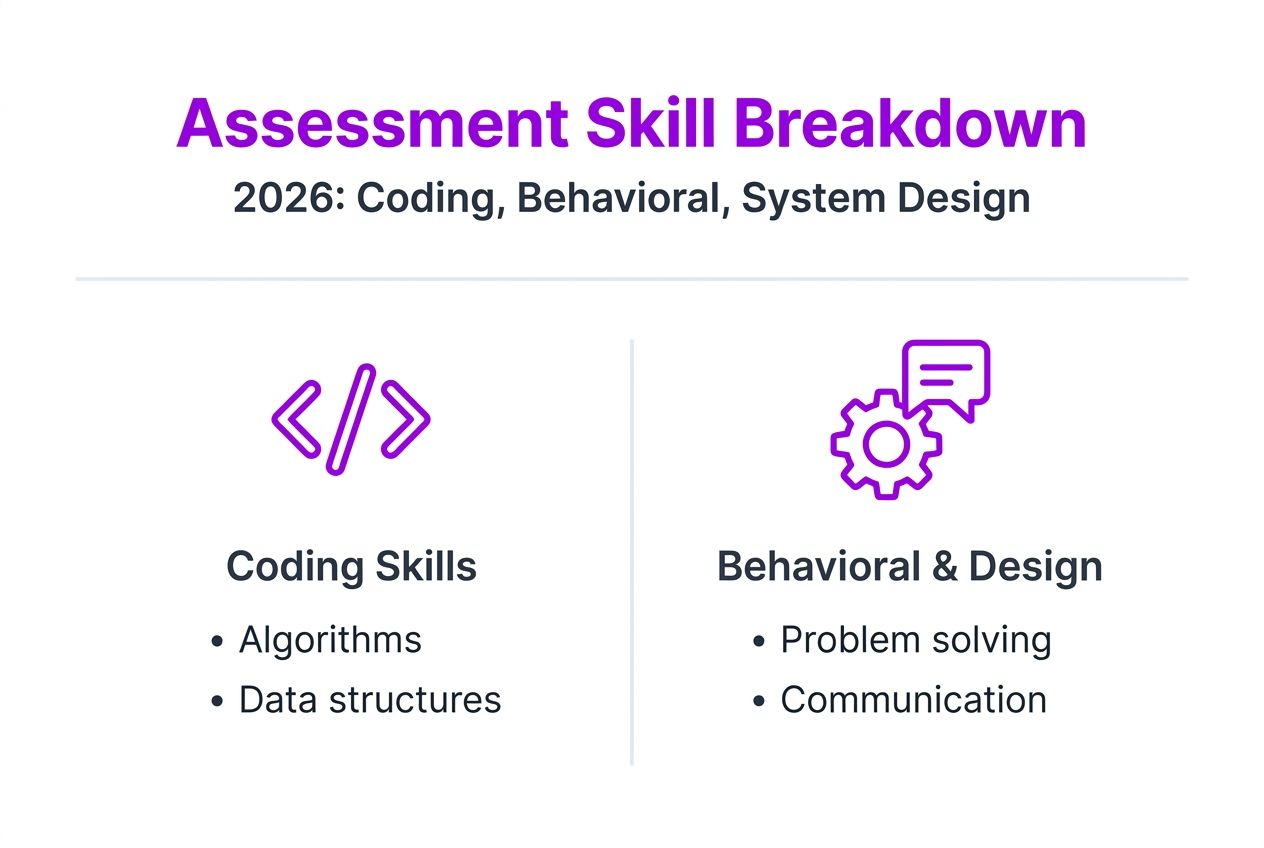
Use the STAR method to prepare behavioral interview guide stories from your actual experience. Identify situations demonstrating key competencies like teamwork, problem solving, and leadership. Incorporate system design study for mid to senior level roles, as architecture discussions become increasingly important with experience. Integrate AI tools during mock and real assessments ethically for personalized feedback that accelerates improvement.
Follow this sequential preparation approach:
- Master core data structures and algorithms through daily practice
- Complete timed challenges on coding platforms like LeetCode
- Develop 5 to 7 STAR method stories covering different competencies
- Study system design fundamentals if targeting mid or senior roles
- Practice with AI assistance tools during mock interviews
- Simulate full assessment conditions including time limits and behavioral questions
Preparation priorities vary by experience level:
| Focus Area | Junior Roles | Senior Roles |
|---|---|---|
| Coding Fundamentals | 60% of prep time | 30% of prep time |
| Behavioral Stories | 25% of prep time | 25% of prep time |
| System Design | 15% of prep time | 45% of prep time |
Comprehensive preparation integrating AI and behavioral techniques improves success rates by 40%. Confident interview preparation guides with AI combines traditional study methods with modern technology advantages. Step by step coding preparation ensures you cover all necessary ground systematically.
Pro Tip: Simulate complete assessment conditions including time limits, behavioral questions, and even mild distractions to build maximum readiness. The more closely your practice matches real conditions, the more confident you’ll feel during actual assessments.
Boost your technical assessment success with MeetAssist
You’ve learned what technical assessments measure and how to prepare across coding, behavioral, and system design dimensions. MeetAssist transforms this knowledge into action by providing personalized AI assistance during actual assessments while respecting your privacy completely.
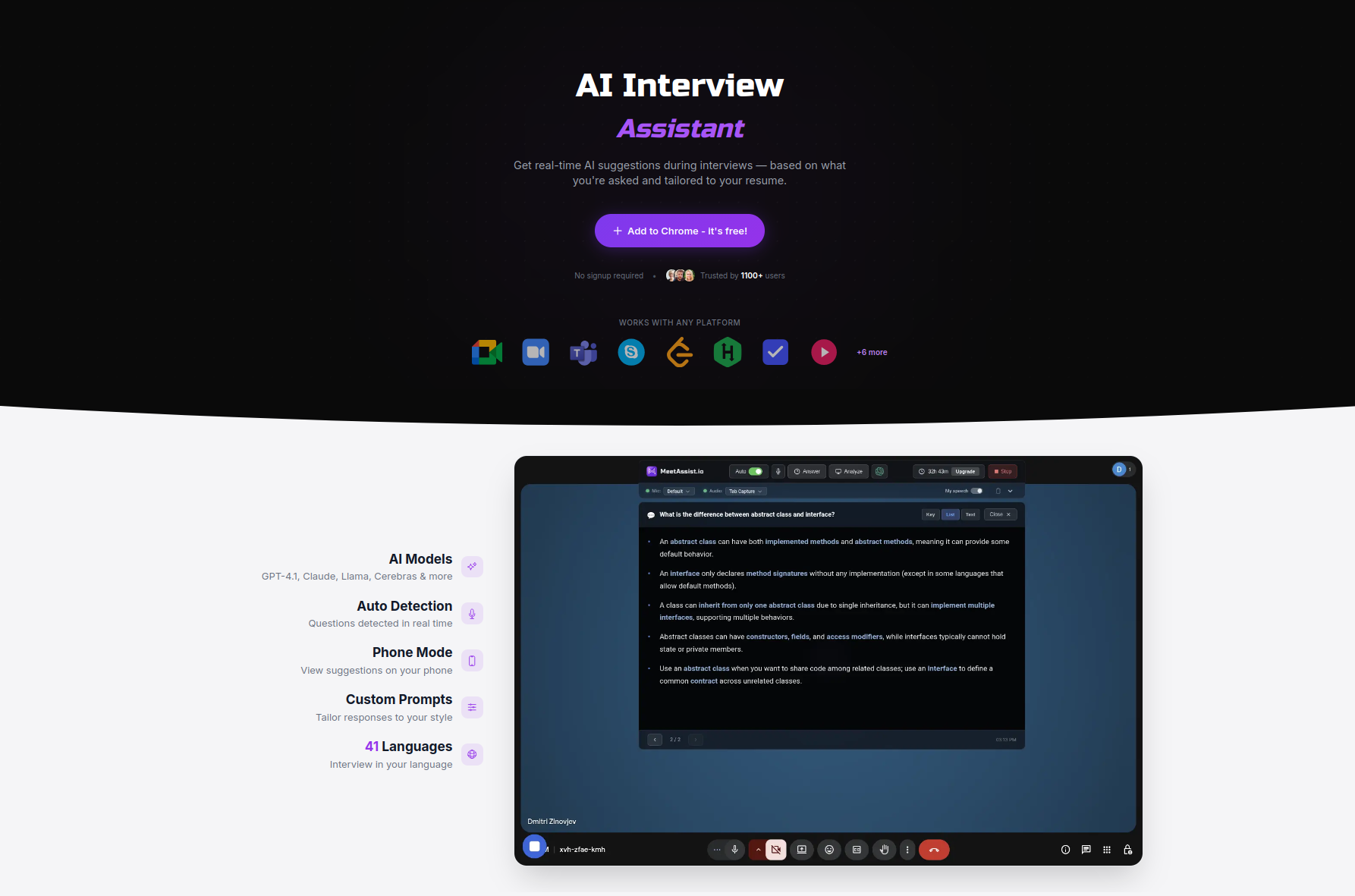
The platform offers real-time guidance tailored to your resume and the specific challenges you face. Phone Mode keeps everything invisible on your computer screen while delivering powerful AI suggestions to your mobile device. Whether you’re tackling algorithm problems or answering behavioral questions, MeetAssist boosts confidence and performance ethically.
MeetAssist’s AI interview assistant supports candidates at every experience level, from junior developers mastering fundamentals to senior engineers navigating complex system design discussions. Follow comprehensive preparation guides that integrate AI tools with proven study techniques. Learn exactly how to use the platform’s features to maximize your assessment performance while maintaining complete privacy and ethical standards.
Frequently asked questions about technical skill assessments
What skills do technical skill assessments measure beyond coding?
Technical assessments evaluate problem solving methodology, communication abilities, behavioral competencies, and cultural fit alongside coding proficiency. Companies want to see how you approach challenges, explain your thinking, collaborate with others, and align with organizational values.
How does the STAR method improve behavioral interview answers?
The STAR method provides a clear structure for organizing responses by describing the Situation, Task, Action, and Result. This framework ensures you give complete, concise answers that demonstrate specific competencies rather than vague generalizations. It helps interviewers understand exactly what you contributed and what outcomes you achieved.
Is using AI assistance during live coding interviews considered cheating?
Ethical AI assistance that provides guidance and suggestions while you maintain control over your work is not cheating. The key distinction is whether the tool supports your problem solving or completes work for you. Transparent use of AI to boost confidence and catch errors aligns with ethical assessment practices, while having AI write entire solutions crosses ethical lines.
What privacy protections does MeetAssist provide?
MeetAssist encrypts all data streams and records no audio or video content during assessments. Phone Mode removes all visible traces from your computer screen while syncing transcripts and AI suggestions to your mobile device. This ensures complete invisibility during assessments while protecting your personal information through strong encryption protocols.
How should I balance studying coding, behavioral, and system design topics?
Junior candidates should allocate roughly 60% of preparation time to coding fundamentals, 25% to behavioral stories, and 15% to basic system concepts. Senior candidates should shift toward 30% coding review, 25% behavioral preparation, and 45% system design study. Adjust these ratios based on your target role’s specific requirements and your current strength areas.