

Preparing for a behavioral interview guide as a developer can feel overwhelming, especially when every answer is meant to reveal your true skills. Giving vague or rambling responses makes it difficult for interviewers to see your strengths. What you need are proven methods that turn your experiences into clear, memorable stories that truly reflect your abilities.
This list will show you how to use the STAR method, demonstrate real problem solving, and communicate with the kind of active listening that sets top candidates apart. You’ll discover practical techniques that make your answers stand out—even when the interview pressure is high. Get ready to unlock concrete strategies that help you deliver responses with confidence and clarity.
Table of Contents
- Understand The STAR Method For Clear Answers
- Showcase Problem Solving With Real Examples
- Practice Active Listening And Thoughtful Responses
- Demonstrate Adaptability In Team Environments
- Highlight Growth Through Feedback And Learning
- Leverage MeetAssist For Real-Time Answer Support
Quick Summary
| Takeaway | Explanation |
|---|---|
| 1. Use the STAR Method | Structure your responses with Situation, Task, Action, and Result to enhance clarity and focus during interviews. |
| 2. Share Real Examples | Provide specific instances of challenges you resolved to demonstrate problem-solving skills and resilience. |
| 3. Practice Active Listening | Engage deeply in the conversation to ensure your responses align with the interviewer’s needs and concerns. |
| 4. Highlight Adaptability | Show how you adjust to changes and support team goals during unexpected situations in your responses. |
| 5. Emphasize Growth Mindset | Discuss how you learn from feedback and challenges, demonstrating your commitment to continuous improvement. |
1. Understand the STAR Method for Clear Answers
Behavioral interviews ask you to describe past situations to predict how you’ll perform in the future. The STAR method is the framework that transforms rambling stories into clear, compelling answers that interviewers want to hear.
STAR stands for Situation, Task, Action, and Result. Each component serves a specific purpose in structuring your response. Think of it as a roadmap that keeps you focused and prevents you from veering off track when you’re nervous.
Why This Framework Works
Interviewers use behavioral interviews to objectively measure past behaviors as predictors of future performance. When you use STAR, you give them exactly what they’re looking for: concrete evidence of your capabilities.
Without structure, candidates often make generalizations or exaggerate. STAR forces you to stay grounded in real examples and emphasize your personal contributions using “I” statements. This authenticity matters more than you might think.
A structured response using the STAR method gives interviewers clear insight into your actual skills and how you handle real challenges.
The Four Components
Situation: Describe the context and background. What was happening? Where were you working? Who else was involved? Keep this brief—20-30 seconds maximum.
Task: Explain your responsibility in that situation. What was your role? What problem needed solving? This clarifies what you were directly accountable for.
Action: This is where you shine. Detail the specific steps you took to address the challenge. Use “I” statements and focus on your personal contributions, not what the team did. Be specific about your decisions and approach.
Result: Share the outcome. What happened because of your actions? Use numbers when possible: “reduced load time by 40%” or “shipped feature 2 weeks early.” Connect the result back to business impact.
Practical Application for Developers
Let’s say you’re asked: “Tell me about a time you had to debug a difficult issue.”
Without STAR, you might say: “Oh, yeah, we had this bug that was really annoying. Our whole team worked on it and eventually figured it out.”
With STAR, you’d say: “I was working on the payment processing module and discovered a race condition that occurred intermittently. I isolated the issue using thread logs and debugged it systematically. I implemented a mutex lock to prevent concurrent access and wrote unit tests to prevent regression. This reduced payment failures by 98% and prevented losing approximately $50,000 in revenue monthly.”
The second version demonstrates problem-solving ability, technical knowledge, and business awareness.
Preparation Tips
- Select 5-7 versatile stories from your experience that you can adapt to different questions
- Choose examples showing teamwork, problem-solving, conflict resolution, and leadership
- Practice delivering each story out loud until it takes 2-3 minutes to tell
- Time yourself—too fast and you sound rehearsed; too slow and you lose focus
- Write down your examples as a reference, but don’t memorize word-for-word
Pro tip: Record yourself telling a STAR story and listen back for filler words, unclear transitions, or moments where you drifted from the framework. Refining your delivery before the interview reduces anxiety significantly.
2. Showcase Problem Solving with Real Examples
Interviewers don’t want to hear how you would solve a problem. They want to know how you actually solved one under real pressure. Real examples reveal your critical thinking and resilience in ways theoretical answers never can.
The difference between a forgettable answer and a memorable one often comes down to specificity. Vague stories sound like you’re making things up. Concrete examples sound like someone who gets things done.
Why Real Examples Matter
Behavioral interview questions assess your ability to identify obstacles, analyze information, and find effective solutions. When you share a real example, you’re proving these skills aren’t just theoretical for you.
Your thought process matters as much as the outcome. Interviewers want to see how you think, not just what you achieved. They’re looking for evidence of analytical thinking, creativity, and resilience.
Real examples from your actual experience carry more weight than hypothetical solutions ever will.
What Makes an Example Work
Not all problems are created equal for interviews. Choose examples that demonstrate:
- A genuine challenge you faced (not something trivial)
- Your personal role and decisions (not just team effort)
- Troubleshooting under pressure or adapting when your first approach failed
- Measurable results or clear outcomes
- Skills relevant to the role you’re interviewing for
Crafting Your Problem-Solving Stories
Start by identifying three to four problems you’ve solved. They might include:
- A bug that took hours to track down
- Performance optimization you implemented
- Technical debt you addressed
- A feature that broke in production
- Integration challenges with third-party services
For each example, write down what happened, what you tried first, what didn’t work, how you adjusted, and what the final result was.
Then practice telling the story using the STAR framework from earlier. Emphasize your specific actions and thought process. Mention tools you used and why you chose them.
Developer-Specific Examples
Suppose you’re asked: “Tell me about a challenging technical problem you solved.”
Weak answer: “We had a bug in the codebase that was hard to find, but I eventually fixed it.”
Strong answer: “We launched a feature on production and users reported slowdowns during peak hours. I used New Relic to identify a database query running in a loop inside our user dashboard component. My first fix was adding a cache layer, but that only cut load time by 20 percent. I realized the real issue was an N+1 query problem. I refactored the query using a join statement, which reduced load time from eight seconds to 1.2 seconds. That eliminated the slowdown complaints and reduced database costs by 35 percent monthly.”
The second answer shows problem diagnosis, iteration, technical knowledge, and business impact.
Pro tip: Choose examples with failures or adaptations, not just straight successes. Interviewers are more impressed by how you handled setbacks than by perfect outcomes.
3. Practice Active Listening and Thoughtful Responses
Most candidates spend interview prep time memorizing answers. What they should be doing is learning to listen. Active listening transforms your entire interview dynamic and shows maturity that hiring managers notice immediately.
When you listen actively, you’re not just hearing words. You’re understanding context, picking up on what matters to the interviewer, and crafting responses that actually address their concerns.
What Active Listening Really Means
Active listening involves maintaining focus, interpreting messages accurately, and responding thoughtfully throughout the conversation. It’s a conscious effort to understand, empathize, and respond in ways that create rapport and trust.
This skill differentiates you from candidates who deliver polished answers regardless of what was actually asked. Interviewers want to feel heard and respected, not like they’re watching a performance.
Active listening shows you care about understanding the role and the interviewer’s perspective, not just getting hired.
Why It Matters for Developers
As a developer, communication matters as much as coding ability. Teams need people who understand requirements fully before building solutions. Active listening demonstrates exactly that.
When you listen carefully, you catch nuances in questions that help you give more relevant answers. You show patience and respect. You prove you can gather information thoroughly before acting.
Practical Techniques
Here’s how to practice active listening in your next interview:
- Pause before answering. Take a breath instead of filling silence with words.
- Ask clarifying questions if the question is unclear: “Can you give me an example of that?”
- Take notes on what the interviewer says. This shows engagement and helps you remember details.
- Paraphrase to confirm understanding: “So you’re looking for someone who can handle legacy code refactoring, right?”
- Maintain eye contact (or look at the camera in virtual interviews) to show attentiveness.
- Avoid interrupting. Let the interviewer finish their thoughts completely.
Real-World Application
Interviewer asks: “Tell me about your experience with debugging.”
Candidate interrupts and launches into a memorized story about a specific bug they fixed, not noticing the interviewer was about to ask for something different.
Active listener pauses, considers the question, then responds: “I have experience with several debugging approaches. Are you asking about tools and techniques I use, or situations where I’ve solved complex problems under time pressure?”
The second candidate just demonstrated better understanding and gives the interviewer what they actually want.
Pro tip: In remote interviews, jot down key phrases from each question on paper before answering. This pause creates space for thoughtful responses and prevents you from defaulting to generic answers.
4. Demonstrate Adaptability in Team Environments
Developers who thrive aren’t the ones who have all the answers. They’re the ones who adjust when circumstances change and help their teams succeed through uncertainty. Adaptability is what separates good developers from great ones.
In behavioral interviews, adaptability shows you can handle the reality of software development. Requirements change. Technologies evolve. Team dynamics shift. Your ability to roll with these changes matters enormously.
Why Adaptability Matters
In agile software development teams, adaptability is critical for handling pivoting quickly and managing communication challenges. Most modern teams work in dynamic environments where flexibility isn’t optional.
Interviewers assess adaptability through questions about setbacks, team conflicts, shifting priorities, and how you embrace change. They want to see that you maintain productivity and positive attitude under pressure.
Teams need developers who adjust their approach when the original plan doesn’t work, not those who rigidly stick to initial solutions.
What Adaptability Actually Looks Like
Adaptability isn’t just saying “I’m flexible.” It’s demonstrating specific behaviors:
- You adjust strategies when initial approaches fail
- You prioritize effectively when plans change suddenly
- You communicate openly during uncertain situations
- You resolve conflicts constructively with teammates
- You embrace new technologies or processes your team adopts
- You stay calm and productive when circumstances shift
Real Examples That Work
Let’s say you’re asked: “Tell me about a time when project requirements changed significantly.”
Weak answer: “We had to pivot our entire feature halfway through, but we got it done anyway.”
Strong answer: “We were two weeks into building a payment integration when the product team discovered a competitor launched similar functionality. We needed to shift focus to a different feature instead. I helped the team assess what we’d built, identified which components we could repurpose, and suggested a refactoring approach. We transitioned the team without losing momentum, launched the new feature on schedule, and actually ended up with cleaner code architecture from the pivot.”
The second answer shows resilience, problem-solving, communication, and positive contribution during disruption.
Building Your Adaptability Story Bank
Think about times when you:
- Had to learn a new technology under pressure
- Switched roles or responsibilities mid-project
- Handled conflicting feedback from stakeholders
- Adjusted your coding approach based on team preferences
- Worked with unfamiliar team members or processes
- Recovered from a failed approach
Write down two to three of these experiences with focus on your personal actions and mindset.
Pro tip: When telling adaptability stories, emphasize your attitude and initiative, not just what happened. Show how you helped the team move forward, not just how you survived the change.
5. Highlight Growth Through Feedback and Learning
Hiring managers don’t expect you to be perfect. They expect you to get better. Showing how you’ve grown through feedback and learning is one of the most compelling things you can demonstrate in a behavioral interview.
A learning mindset signals maturity and resilience. It tells interviewers you won’t stagnate in the role and that you’re coachable. These qualities matter more to many teams than specific technical skills you already possess.
Why Growth Stories Matter
Behavioral questions about growth emphasize how individuals reflect on feedback, adapt their methods, and apply new knowledge to improve outcomes. When you share a growth story, you’re proving you can evolve as a professional.
Interviewers want to see that you actively seek feedback, embrace challenges, and apply what you learn. This demonstrates commitment to continuous professional development, which is invaluable in software development where technology constantly changes.
Developers who embrace learning and feedback become stronger team members over time, making them invaluable hires.
What Growth Stories Reveal
Effective growth examples showcase:
- A specific skill or area where you struggled initially
- How you sought feedback or identified your development need
- Concrete steps you took to improve
- The measurable outcome or change in your performance
- Your mindset shift throughout the process
Real Examples That Resonate
Question: “Tell me about a time you received critical feedback and what you did with it.”
Weak answer: “A senior developer gave me feedback on my code. I fixed it and got better.”
Strong answer: “Early in my first role, a senior engineer reviewed my pull request and pointed out that I was writing overly complex solutions. I was defensive at first, but I asked them to mentor me on simplicity. We paired on several reviews, and they taught me to write readable code that solves the problem directly. Six months later, my code reviews shifted from requiring major refactors to shipping with minimal changes. More importantly, I started mentoring junior developers on code clarity, which became a strength.”
The second answer shows humility, coachability, concrete improvement, and how you then helped others.
Building Your Growth Narrative
Identify experiences where you:
- Made a mistake and learned from it
- Received feedback that was hard to hear but valuable
- Struggled with a technical skill and improved through effort
- Helped someone else improve and grew yourself
- Learned a new technology or framework
- Changed your approach based on team feedback
For each example, write down what you learned and how it changed your work.
Pro tip: Frame growth stories around skills relevant to the role, not just any learning experience. If you’re interviewing for a backend position, talk about learning server architecture, not how you improved at public speaking.
6. Leverage MeetAssist for Real-Time Answer Support
You’ve prepared extensively for your behavioral interview. You know the STAR method. You have stories ready. But when the interviewer asks a question you didn’t anticipate, panic can short-circuit your best thinking. Real-time answer support tools can bridge that gap and boost your confidence dramatically.
Technology should work for you during interviews, not against you. The right tool becomes an invisible safety net that lets you think clearly and respond thoughtfully instead of freezing up.
How Real-Time Support Works
MeetAssist is an AI-powered Chrome extension that transcribes and analyzes interview questions in real-time during video interviews on platforms like Google Meet, Microsoft Teams, and Zoom. It listens to your interviewer, understands what they’re asking, and instantly generates answer suggestions tailored to your resume and experience.
You don’t have to choose between thinking and answering. The tool gives you intelligent suggestions that you can adapt to your own words, letting you respond naturally while staying on track.
Real-time answer support removes the anxiety of blanking on questions, letting you focus on delivering your best self.
Key Features That Matter
When selecting a real-time interview tool, look for:
- Instant transcription that captures questions accurately
- Answer suggestions customized to your background and skills
- Clean interface design that doesn’t distract from your video call
- Multi-platform support for Google Meet, Microsoft Teams, Zoom, and other video platforms
- Resume integration so suggestions match your actual experience
- Discreet operation that keeps your screen looking professional
Practical Application During Interviews
You’re in a behavioral interview. The interviewer asks: “Tell me about a time you made a mistake and how you handled it.”
Instead of scrambling to remember a specific example while your mind races, you see instant suggestions that reference your actual experience. You choose the most relevant story, adapt it to your own words, and deliver a thoughtful answer using the STAR framework.
The tool isn’t writing your answer. You are. It’s simply removing the cognitive burden of searching your memory under pressure.
Setting Yourself Up for Success
To maximize real-time support effectiveness:
- Upload your resume before the interview so suggestions match your background
- Customize your answer style preferences (concise, detailed, STAR method, bullet points)
- Test the tool during a practice interview before the real thing
- Use suggestions as starting points, not scripts to read verbatim
- Trust your judgment when a suggestion doesn’t feel authentic to you
Beyond the Interview Room
Real-time support tools also help with technical assessments and coding challenges. Some platforms analyze active browser tabs and provide coding help, answer suggestions, and resource recommendations when you’re working through problems online.
Pro tip: Practice using real-time support tools during mock interviews with friends or mentors before your actual interview. You’ll learn how to glance at suggestions naturally without appearing distracted or robotic.
Below is a comprehensive table summarizing the key concepts and strategies discussed throughout the article about behavioral interview techniques and effective storytelling methods.
| Concept | Description | Key Takeaways |
|---|---|---|
| STAR Method | A framework for structuring answers in behavioral interviews. | Enhances clarity and relevance of responses by focusing on situation, task, action, and result. |
| Importance of Specificity | Emphasizing real examples over hypothetical scenarios in responses. | Demonstrates problem-solving ability and establishes credibility and authenticity. |
| Active Listening | Focused effort to understand and interpret interviewer’s intent. | Demonstrates maturity, builds rapport, and ensures responses are aligned with the interviewer’s needs. |
| Adaptability in Team Environments | Highlighting flexibility and positive response to changing circumstances. | Valued by teams practicing dynamic methodologies like agile development. |
| Growth Through Feedback | Sharing experiences of learning and improvement from constructive criticism. | Shows coachability, resilience, and commitment to professional development. |
| Real-Time Answer Support Tools | Tools like MeetAssist that provide live suggestions during interviews. | Reduces anxiety and enhances response quality, leveraging resume insights for tailored suggestions. |
This table provides a structured summary of the article’s highlights and actionable insights for preparing behavioral interview responses effectively.
Boost Your Behavioral Interview Confidence with Real-Time AI Support
Behavioral interviews demand clear, structured answers using methods like STAR to showcase your problem-solving, adaptability, and growth. Yet, even the best preparation can be challenged by unexpected questions or interview pressure. MeetAssist understands this critical challenge and offers a cutting-edge Chrome extension designed to provide real-time AI-powered answer suggestions that adapt to your background and resume. This ensures you stay composed and deliver thoughtful, tailored responses on the spot.
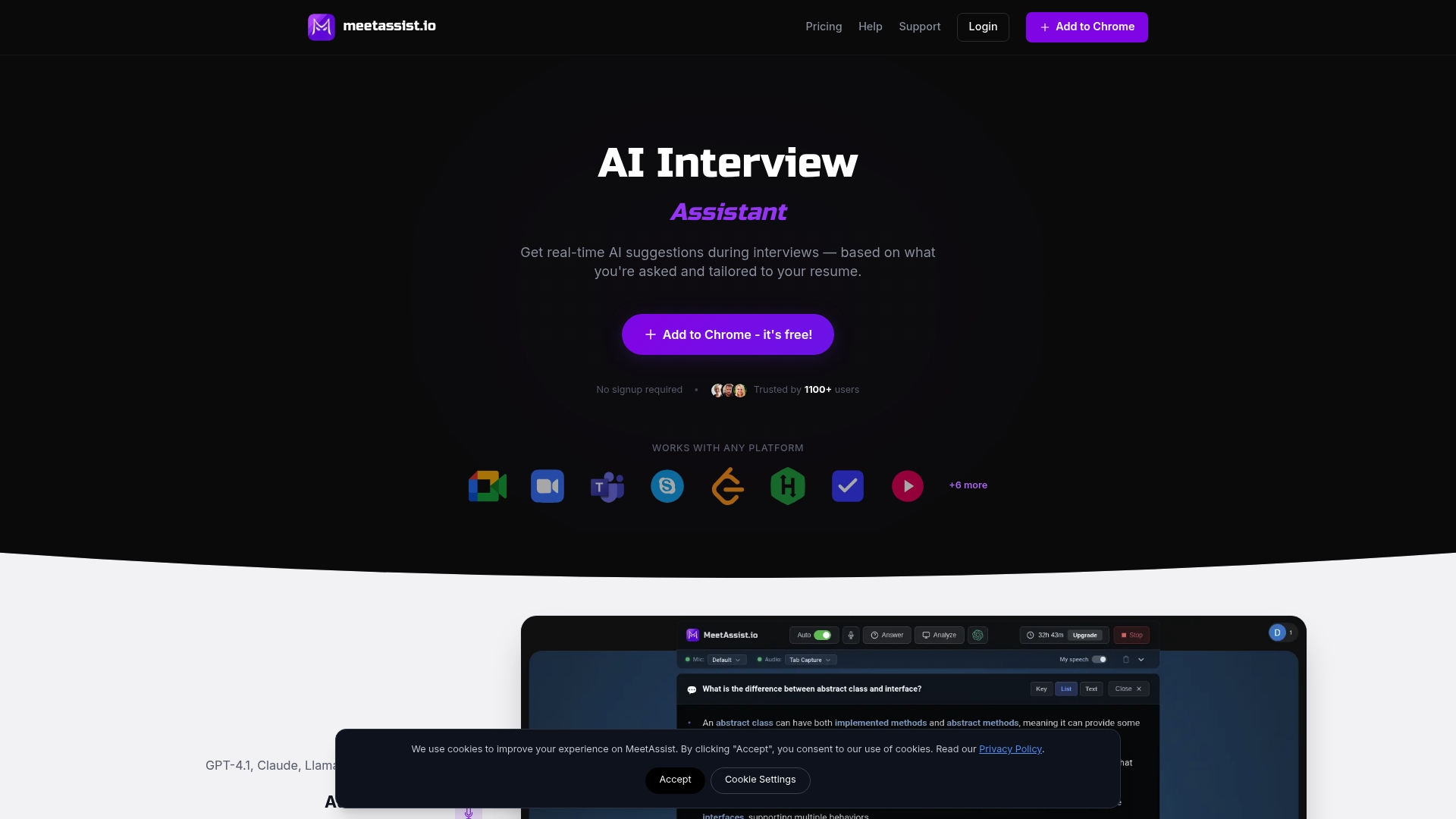
Don’t let interview anxiety hold you back from demonstrating your true potential. Experience how MeetAssist integrates seamlessly with platforms like Google Meet and Microsoft Teams, helping you capture every question clearly and generate personalized answers that emphasize your skills and experiences. Visit MeetAssist now and transform your interview preparation guides into a confident performance. Take control of your next behavioral interview and make every answer count.
Frequently Asked Questions
How can the STAR method help me in behavioral interviews as a developer?
The STAR method provides a structured approach to answering behavioral questions by organizing your response into Situation, Task, Action, and Result. By practicing this framework, you can deliver clear, concise answers that showcase your problem-solving abilities and contributions effectively.
What types of examples should I use to demonstrate my problem-solving skills in interviews?
Focus on sharing real examples of significant challenges you’ve faced, the actions you took, and the outcomes of those actions. Aim to select examples that highlight your individual contributions and quantify results wherever possible, such as reducing error rates by a specific percentage.
How can I practice active listening during a behavioral interview?
Active listening involves fully concentrating on the interviewer, understanding their questions, and responding thoughtfully. You can practice this by pausing before responding, asking clarifying questions, and summarizing parts of the conversation to confirm your understanding.
What should I do if project requirements change during an interview scenario question?
When discussing adaptability in an interview, illustrate how you effectively handled shifting requirements by detailing your thought process and specific actions taken to adjust. Highlight your proactive communication and teamwork in navigating the changes to maintain project momentum.
How can I demonstrate growth and learning from feedback in my answers?
To effectively showcase growth, discuss a specific skill or area where you struggled, the feedback you received, and the concrete steps taken to improve. This demonstrates your willingness to learn and adapt, showing interviewers you are committed to developing your skills continuously.
What is the role of real-time answer support tools during an interview, and how can I use them?
Real-time answer support tools assist you by providing instant suggestions for responses during an interview, alleviating the pressure of recalling information on the spot. To use these tools effectively, prepare your resume in advance, customize your answer style, and practice in mock interview settings to ensure a natural flow during the actual interview.