

Recruiters spend just seven seconds scanning resumes, and interviews demand even faster mental processing. When you ramble through a five minute story about your last project, interviewers lose track of your key points. Bullet point answers give you a structured framework to deliver high impact responses that land with precision. This guide reveals why bullet points work, how to use proven frameworks like STAR and VTMR, and practical strategies to implement them in behavioral and technical interviews.
Table of Contents
- Why Bullet Point Answers Boost Interview Clarity And Speed
- Structuring Bullet Point Answers With STAR And VTMR Methods
- Common Misconceptions And Best Practices For Bullet Point Interview Answers
- Applying Bullet Point Answers In Technical And Behavioral Interviews
- MeetAssist: Your Partner For Bullet Point Interview Success
- FAQ
Key takeaways
| Point | Details |
|---|---|
| Recruiters scan quickly | Bullet points improve information processing speed by delivering key facts in digestible chunks. |
| Structured frameworks boost clarity | STAR and VTMR methods give your bullet points a logical flow that interviewers follow easily. |
| Bullet points increase perceived competence | Organized answers signal professionalism and help interviewers recall your achievements. |
| Time constraints favor concise delivery | Bullet points let you cover more ground when interview slots are limited. |
| Practice prevents robotic delivery | Personalization and rehearsal keep bullet point answers sounding natural and authentic. |
Why bullet point answers boost interview clarity and speed
Interviewers process dozens of candidate responses every week, making quick comprehension essential. Your answer competes with mental fatigue, scheduling pressures, and the next candidate waiting outside. Bullet points reduce cognitive load by breaking complex information into bite sized segments that your interviewer can absorb immediately.
Research shows information in bullet points is processed up to 50% faster than dense paragraphs. This speed advantage matters when you have 60 seconds to explain a technical project or two minutes to share a leadership example. Bullet points act as signposts, guiding your interviewer’s attention to specific achievements and results.
The format mirrors how applicant tracking systems and recruiters parse resumes, creating cognitive consistency across your job search materials. When you structure your spoken answers the same way you organize your resume bullets, interviewers recognize patterns and retain details more effectively. This alignment strengthens your overall candidate profile.
Bullet points also force you to identify the most critical elements of your story. Instead of wandering through background context, you highlight the situation, your specific actions, and measurable outcomes. This discipline prevents you from burying your accomplishments in unnecessary details.
Consider these core benefits of bullet point interview answers:
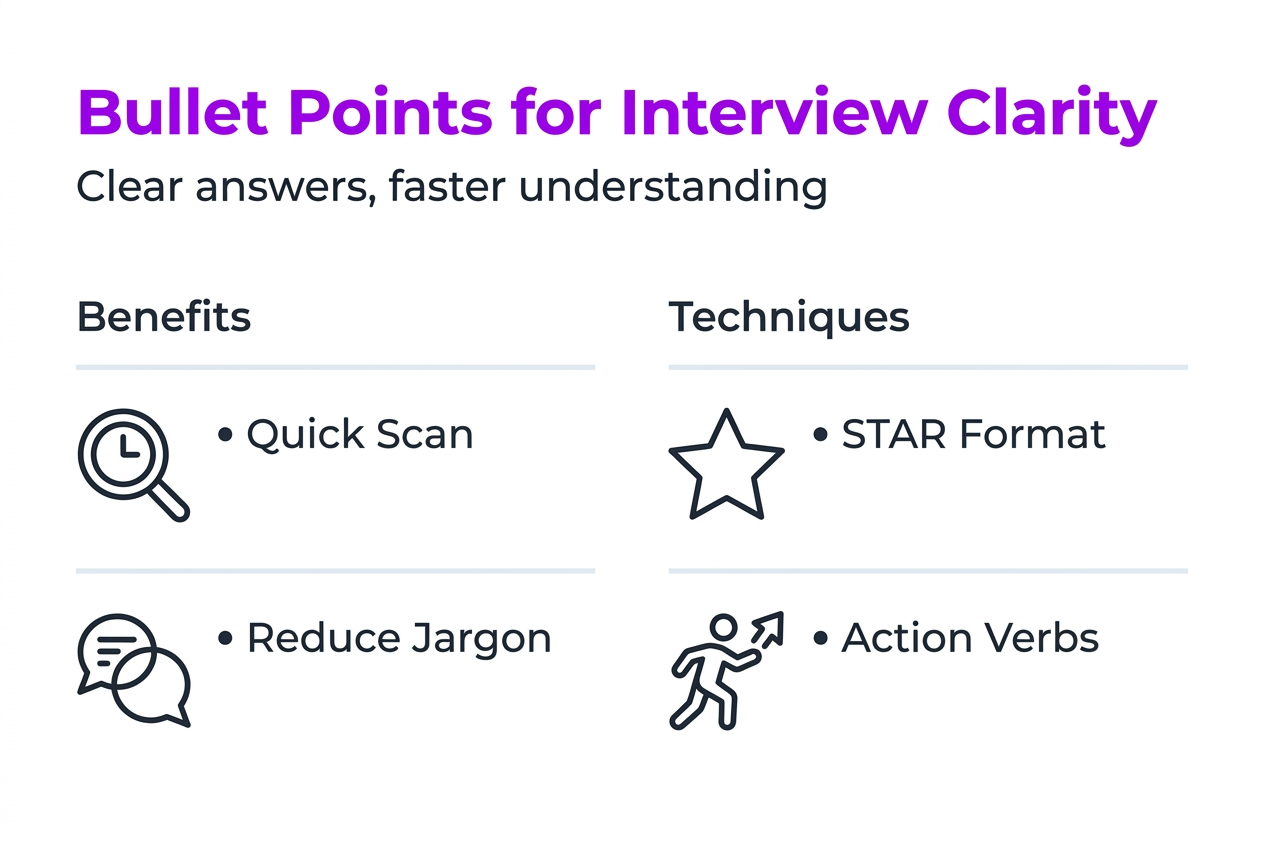
- Faster information processing for time pressed interviewers
- Reduced cognitive load through clear information hierarchy
- Enhanced recall of your key achievements and results
- Stronger alignment with resume formatting conventions
- Forced prioritization of high impact details
Check out our interview tips articles for more strategies on delivering memorable responses. The same principles that make bullet points effective in resumes apply directly to spoken interview answers.
Structuring bullet point answers with STAR and VTMR methods
Frameworks transform bullet points from random facts into compelling narratives. The STAR method structures answers as Situation, Task, Action, and Result, giving interviewers a complete story arc. VTMR adds Verb, Task, Metric, and Result for action packed responses that emphasize quantifiable achievements.
Research indicates the STAR method combined with bullet points boosts communication effectiveness by 40% compared to unstructured responses. This improvement stems from logical sequencing that helps interviewers follow your thought process without mental gaps.
The VTMR framework enhances impact by leading with strong action verbs that convey initiative. When you start each bullet with “Led,” “Designed,” or “Optimized,” you immediately establish ownership and agency.

Here’s how these frameworks compare:
| Framework | Structure | Best For | Example Opening |
|---|---|---|---|
| STAR | Situation, Task, Action, Result | Behavioral questions requiring full context | “Faced declining user engagement…” |
| VTMR | Verb, Task, Metric, Result | Achievement focused technical answers | “Optimized database queries by 60%…” |
Follow these steps to build effective bullet point answers:
- Identify the core question theme (leadership, problem solving, technical skill)
- Select 3 to 5 key points that directly address the question
- Sequence points using STAR or VTMR logic
- Lead each bullet with a strong action verb
- Include at least one quantifiable metric or outcome
Pro Tip: Begin every bullet point with a different action verb to demonstrate range and avoid repetition. Rotating between verbs like “Implemented,” “Collaborated,” and “Analyzed” showcases diverse capabilities.
Our behavioral interview questions guide provides question specific frameworks that integrate bullet point structures. The combination of proven methods and concise delivery maximizes your answer impact.
Common misconceptions and best practices for bullet point interview answers
Many candidates worry bullet points make answers sound robotic or overly scripted. This concern stems from confusing structure with authenticity. Structure provides a skeleton, but your unique experiences, tone, and delivery add personality.
The key difference lies in rehearsal and personalization. When you memorize generic bullet points word for word, you sound canned. When you internalize the framework and adapt examples to each interviewer’s focus, you sound prepared and thoughtful.
Practice and personalization prevent robotic delivery by letting you adjust emphasis based on interviewer reactions. If they lean forward during your technical explanation, you expand that bullet. If they check their notes during background context, you trim situation details.
Avoid these common bullet point mistakes:
- Using more than 5 bullets per answer, overwhelming the interviewer
- Listing tasks without connecting them to results or impact
- Repeating the same opening verb across multiple bullets
- Forgetting to transition smoothly between bullet points
- Reading bullets verbatim instead of speaking conversationally
Experts emphasize that bullet points structure your narrative for clarity, not just itemize facts. As one career coach notes:
Bullet points are scaffolding for your story. They keep you on track while giving you flexibility to emphasize what resonates with each interviewer.
Pro Tip: Practice converting your written bullet points into natural speech by recording yourself. Listen for awkward phrasing or stiff transitions, then adjust your wording to sound conversational.
Authenticity comes from owning your experiences, not abandoning structure. Review our guide on resume-based answer authenticity to see how personalization and structure work together.
Applying bullet point answers in technical and behavioral interviews
Behavioral interviews benefit immensely from bullet point STAR answers that organize leadership examples, conflict resolution, and teamwork stories. Technical candidates use bullet points to outline problem scope, solution approach, and measurable results without drowning interviewers in implementation details.
Candidates using STAR bullet points are perceived as more organized and provide complete answers that satisfy interviewer evaluation criteria. This perception advantage matters when interviewers compare you to candidates who ramble or omit key details.
Consider how format affects response clarity:
| Format | Average Length | Clarity Rating | Interviewer Recall |
|---|---|---|---|
| Paragraph | 4-5 minutes | 6.2 out of 10 | 45% of key details |
| Bullet points | 2-3 minutes | 8.7 out of 10 | 78% of key details |
For technical problem solving, structure your answer with these numbered steps:
- State the technical challenge or constraint you faced
- Outline your analysis approach or research method
- Describe the solution architecture or implementation strategy
- Quantify the performance improvement or business impact
- Mention lessons learned or future optimizations
This sequencing helps interviewers follow complex technical explanations without losing the thread. You cover ground efficiently, leaving time for follow up questions that demonstrate deeper expertise.
Bullet points also maximize impact within limited interview slots. When you have 30 minutes for four questions, spending five minutes per answer leaves room for meaningful dialogue. Concise bullet point responses free up time for interviewers to probe your thinking process.
Explore our customizable tech interview responses to see bullet point frameworks applied to coding challenges, system design, and algorithm questions. The same principles work across interview types.
MeetAssist: your partner for bullet point interview success
Preparing structured bullet point answers takes practice and real time feedback. MeetAssist offers AI powered tools that help you craft STAR and VTMR responses tailored to your resume and target role. Our platform analyzes your spoken practice answers, suggesting improvements to clarity, conciseness, and impact.
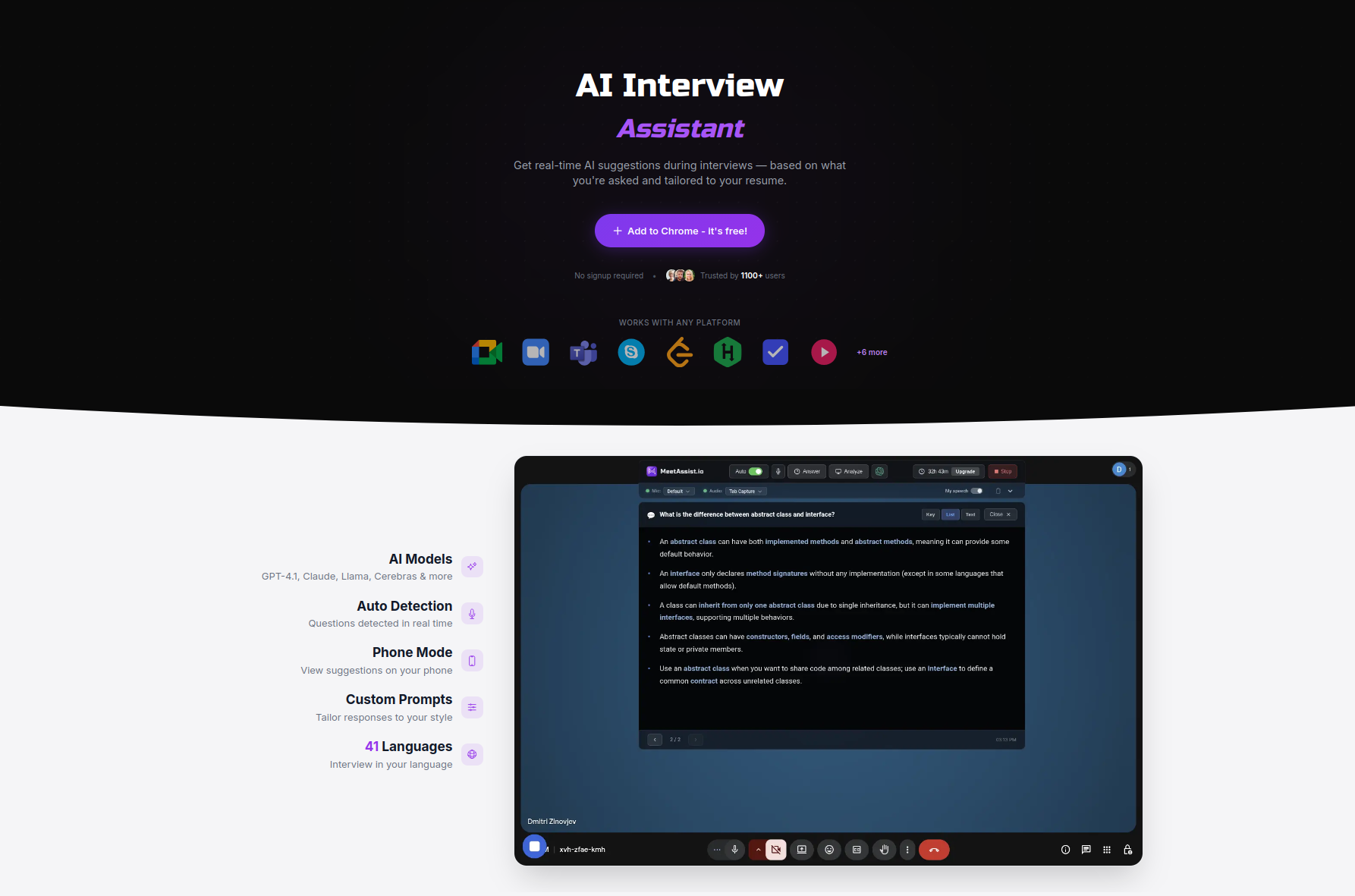
You can customize answer styles including bullet point formats during live interviews. Upload your resume to generate personalized responses that highlight your specific achievements. Whether you’re preparing for behavioral questions or technical deep dives, MeetAssist supports structured delivery that makes interviewers take notice.
Our Phone Mode feature lets you practice bullet point answers while reviewing real time AI suggestions without visible on screen prompts. This setup builds confidence for actual interviews where you’ll deliver bullet points naturally. Visit MeetAssist to explore interview prep tools that strengthen your bullet point technique. For role specific preparation, check our UX designer interview prep resources that demonstrate industry tailored bullet point strategies.
FAQ
Why should I use bullet points in interview answers?
Bullet points break down complex information into digestible segments that reduce cognitive load for interviewers. They enhance clarity by creating visual and mental separation between key ideas, making your accomplishments easier to recall. Structured bullet point delivery also signals organization and professionalism, differentiating you from candidates who provide meandering responses.
How many bullet points should I use when answering a question?
Aim for 3 to 5 bullet points per answer to balance detail with digestibility. This range gives you enough space to cover situation, actions, and results without overwhelming the interviewer. Fewer than 3 bullets may seem incomplete, while more than 5 risks information overload and dilutes your key messages.
Can bullet points make my answers sound unnatural?
Bullet points create structure, but practice and personalization prevent robotic delivery. Rehearse converting written bullets into conversational speech before interviews. Focus on internalizing the framework rather than memorizing exact wording, and adjust emphasis based on interviewer reactions. Check our resume-based answer authenticity guide for techniques that maintain your unique voice while using structured formats.
How do bullet points help in behavioral interviews?
Bullet points organize STAR responses into clear sections that make your stories easier to follow. They highlight specific actions you took and measurable results you achieved, helping interviewers evaluate your capabilities against job requirements. This structure ensures you don’t forget critical details under pressure. Explore our behavioral interview guide strategies for question specific bullet point templates.