
Standing out after an interview requires more than just a good performance during the conversation itself. You’ve prepared thoroughly, answered questions confidently, and made a strong impression, but the journey doesn’t end when you leave the meeting room or close your browser tab. A strategic follow-up can be the difference between landing your dream role and watching it slip away. Research shows that interview preparation anxiety is high among tech candidates, and many feel education inadequate for the full interview process, including what happens after. This comprehensive checklist will guide you through proven follow-up strategies that keep you top of mind with hiring managers while demonstrating professionalism, enthusiasm, and attention to detail that sets you apart from other candidates.
Table of Contents
- Key takeaways
- Key criteria for an effective interview follow-up checklist
- Essential checklist items for your interview follow-up
- Comparing follow-up methods: email, calls, and LinkedIn
- Tailored follow-up strategies for different interview scenarios
- Enhance your interview follow-ups with MeetAssist
- Frequently asked questions
Key Takeaways
| Point | Details |
|---|---|
| 24 Hour Follow Up | Send your first follow up within 24 hours to reinforce interest and stay top of mind. |
| Personalization Boosts Impact | Reference a specific conversation point or project from the interview to personalize the message and show genuine interest. |
| Clear Objectives Avoid Rambling | Keep messages focused on a single clear objective to prevent confusion and respect the interviewer’s time. |
| Limit Follow Up Attempts | Limit the number of contact attempts to two or three to maintain professionalism and avoid desperation. |
| Match Company Culture | Research the company culture and mirror its communication style to ensure your tone fits. |
Key criteria for an effective interview follow-up checklist
Building a successful follow-up strategy starts with understanding what makes communication effective rather than annoying. You need clear criteria to guide every interaction you have with potential employers after your interview concludes. The foundation rests on five essential elements that separate professional persistence from desperate pestering.
Timeliness stands as your first critical criterion. Sending your initial follow-up within 24 hours demonstrates respect for the interviewer’s time and shows you’re organized and eager. This window keeps you fresh in their memory while the interview details remain vivid. Waiting longer risks being forgotten as they move through dozens of other candidates.

Personalization transforms generic templates into meaningful communication. Reference specific conversation points from your interview, mention projects the interviewer discussed, or acknowledge challenges they shared about the role. Generic messages scream mass production and suggest you’re not genuinely interested in this particular opportunity. For interview prep success, treating each follow-up as a unique conversation rather than a checkbox task makes all the difference.
Clarity in your objectives prevents rambling messages that confuse rather than convince. Each follow-up should have one clear purpose: thanking them, providing requested information, reiterating fit, or checking on timeline updates. Mixing multiple objectives in a single message dilutes your impact and makes it harder for busy hiring managers to process your communication quickly.
Strategic persistence requires balancing continued interest with professional boundaries. Strategic persistence wins in many contexts, with sales data showing 80% of closures happen after five or more touches, but job search follow-ups demand more restraint. Cap your attempts at two to three contacts to avoid crossing into desperation territory that damages your candidacy rather than helping it.
Cultural alignment ensures your follow-up style matches company expectations. A startup might appreciate casual LinkedIn engagement, while a Fortune 500 corporation expects formal email communication. Research the company’s communication norms through their website, social media presence, and employee reviews before crafting your approach. Mismatched tone signals you haven’t done your homework or won’t fit their environment.
Pro Tip: Create a simple spreadsheet tracking each follow-up attempt with date, method, content summary, and response received to refine your approach over time and avoid duplicate outreach.
Essential checklist items for your interview follow-up
Your follow-up checklist should contain specific actionable steps that guide you through the post-interview period with confidence and clarity. These items form the backbone of professional communication that hiring managers expect and appreciate.
-
Send a thank-you email within 24 hours of your interview completion. This message should express genuine appreciation for their time, reference one or two specific discussion points that resonated with you, and briefly reaffirm your enthusiasm for the role. Keep it concise at three to four paragraphs maximum.
-
Confirm delivery of any requested additional materials or information. If the interviewer asked for references, work samples, or clarification on any points, prioritize getting these to them within 48 hours. Prompt delivery demonstrates reliability and organizational skills that employers value highly.
-
Reiterate your fit for the role by connecting interview discussions to your qualifications. Mention how specific aspects of the position align with your skills and career goals, using concrete examples from your background. This reinforces why you’re the right choice without simply repeating your resume.
-
Tailor each follow-up to the specific interviewer or panel member. If you met with multiple people, send individual messages rather than a group email. Reference unique points from each conversation to show you were fully engaged and remember distinct interactions. This personalization requires more effort but yields significantly better results.
-
Space your follow-ups strategically to maintain presence without overwhelming. After your initial thank-you, wait one week before checking on timeline updates if you haven’t heard back. If they provided a decision timeframe, wait until that date passes before following up. Strategic persistence must be balanced with patience to avoid appearing desperate or pushy.
-
Keep detailed notes on each interaction for future reference. Document who you spoke with, what you discussed, what materials you sent, and any commitments made by either party. This prevents embarrassing duplications and helps you reference previous conversations accurately in subsequent communications.
Pro Tip: Set calendar reminders for follow-up timing so you never miss the optimal window or accidentally contact them too frequently, maintaining professional consistency throughout your job search.
Comparing follow-up methods: email, calls, and LinkedIn
Choosing the right communication channel for your follow-up significantly impacts how your message is received and processed by hiring managers. Each method carries distinct advantages and limitations that you should weigh carefully based on your specific situation and company culture.
Email remains the gold standard for post-interview follow-ups across most industries and company sizes. It provides a written record, allows recipients to respond on their schedule, and maintains professional boundaries naturally. Hiring managers can forward your message to other decision makers easily, and you can craft your language carefully before sending. The main drawback is that emails can get buried in crowded inboxes, especially at larger organizations where recruiters manage hundreds of candidates simultaneously.
Phone calls offer a more personal touch that can strengthen rapport if you established good chemistry during the interview. Hearing your voice reminds them of your personality and enthusiasm in ways text cannot capture. However, calls carry higher risk because they interrupt the recipient’s workflow and can feel intrusive if you haven’t built sufficient relationship foundation. Most experts recommend reserving calls for situations where you have explicit permission or very strong existing rapport with the interviewer.
LinkedIn serves as an excellent complementary channel that keeps you visible without the formality of email or intrusiveness of calls. Connecting with interviewers on the platform after your meeting maintains professional networking presence and allows them to see your ongoing activity and endorsements. You can share relevant industry content that demonstrates your expertise and engagement. The platform works particularly well for tech roles where LinkedIn presence is expected and valued. Just avoid using LinkedIn messages as your primary follow-up method unless the company culture strongly favors it.
| Method | Best for | Timing | Pros | Cons |
|---|---|---|---|---|
| Initial thank-you, formal updates | Within 24 hours, then weekly | Professional, documented, easy to forward | Can get lost in inbox | |
| Phone | Strong rapport situations only | After email attempts | Personal, immediate feedback | Intrusive, no record |
| Ongoing visibility, networking | After initial email | Maintains presence, shows activity | Less formal, not primary channel |
Your method selection should align with how you initially connected with the company and what communication channels they used during the interview process. If everything happened via email and their online portal, stick with email. If the recruiter called you directly and seems to prefer phone conversations, a brief call might work after your initial email thank-you. For interview tips that work across communication channels, focus on consistency and matching the company’s established communication style rather than imposing your preferred method.
Tailored follow-up strategies for different interview scenarios
Different interview types and company contexts demand adjusted follow-up approaches that acknowledge the unique dynamics of each situation. A one-size-fits-all strategy fails to account for the varying expectations across industries, company sizes, and interview formats.
Phone and video interviews require particularly swift thank-you messages because these formats often serve as initial screening steps before in-person meetings. Send your follow-up within 12 hours if possible, keeping it brief and focused on moving to the next stage. Mention specific technical topics discussed or challenges you addressed during the conversation to prove you were fully engaged despite the remote format. Reference any soft skills interview tips that helped you connect with the interviewer to reinforce your interpersonal capabilities.
Large corporations typically have more formal processes and longer decision timelines than startups or small companies. Your follow-ups should reflect this structure with professional email communication that respects their established procedures. Avoid excessive persistence, as these organizations often have strict policies about candidate communication that recruiters must follow. Two follow-ups maximum usually suffices, with the second coming only after any stated decision deadline has passed.
Startups and smaller companies often appreciate more personal, direct communication that shows genuine excitement about their mission and product. You might connect on LinkedIn more quickly, reference specific startup challenges you discussed, or even share relevant articles about their industry space. These environments value cultural fit highly, so your follow-ups can be slightly less formal while still maintaining professionalism. Just ensure you’re reading the room correctly and not assuming casualness where it doesn’t exist.
Technical interviews demand follow-ups that demonstrate continued problem-solving engagement. If you discussed a coding challenge or system design question, you might send a brief note with an alternative approach you considered or a resource related to the technical topic. This shows you’re still thinking about the problems and genuinely interested in the technical aspects of the role. For job interview answer strategies that extend beyond the interview itself, treating technical discussions as ongoing conversations rather than one-time tests can set you apart.
Behavioral interviews benefit from follow-ups that reinforce the stories and examples you shared. Reference specific situations you discussed and how they connect to the role’s requirements. If you thought of a better example after the interview ended, briefly mention it as additional evidence of your qualifications. This demonstrates reflection and self-awareness that behavioral interviews aim to assess.
| Interview type | Follow-up timing | Key elements | Example approach |
|---|---|---|---|
| Phone screening | Within 12 hours | Brief, next-step focused | “Thank you for the initial conversation. I’m excited to discuss [specific topic] in more depth.” |
| Video interview | Within 24 hours | Technical engagement, format acknowledgment | “I appreciated discussing [project]. Here’s an additional thought on [technical point].” |
| In-person final | Within 24 hours | Team fit, detailed enthusiasm | “Meeting the team confirmed this role aligns perfectly with my goals in [specific area].” |
| Technical assessment | Within 24 hours | Problem-solving continuation | “I’ve been thinking about the [challenge] and wanted to share an alternative approach.” |
Monitoring responses helps you adjust your persistence appropriately. If you receive a reply to your first follow-up, even a brief acknowledgment, you know they’re tracking your candidacy and you should wait for their next move. Radio silence after two attempts signals it’s time to move on rather than continuing to reach out. Strategic persistence must be balanced with reading signals about whether your continued contact is welcome or becoming a nuisance.
Pro Tip: Maintain a follow-up log in a simple spreadsheet with columns for company name, interviewer names, dates of each contact, method used, content summary, and any responses received. This system prevents embarrassing duplications, helps you track patterns in what works, and ensures you’re spacing attempts appropriately across multiple opportunities you’re pursuing simultaneously.
Enhance your interview follow-ups with MeetAssist
Mastering interview follow-ups becomes significantly easier when you have the right tools supporting your preparation and execution. MeetAssist provides AI-powered assistance throughout your entire interview process, including the critical follow-up phase that many candidates neglect. The platform’s real-time conversation analysis during your interview helps you identify key discussion points to reference in your follow-up messages, ensuring your communication feels specific and personalized rather than generic.
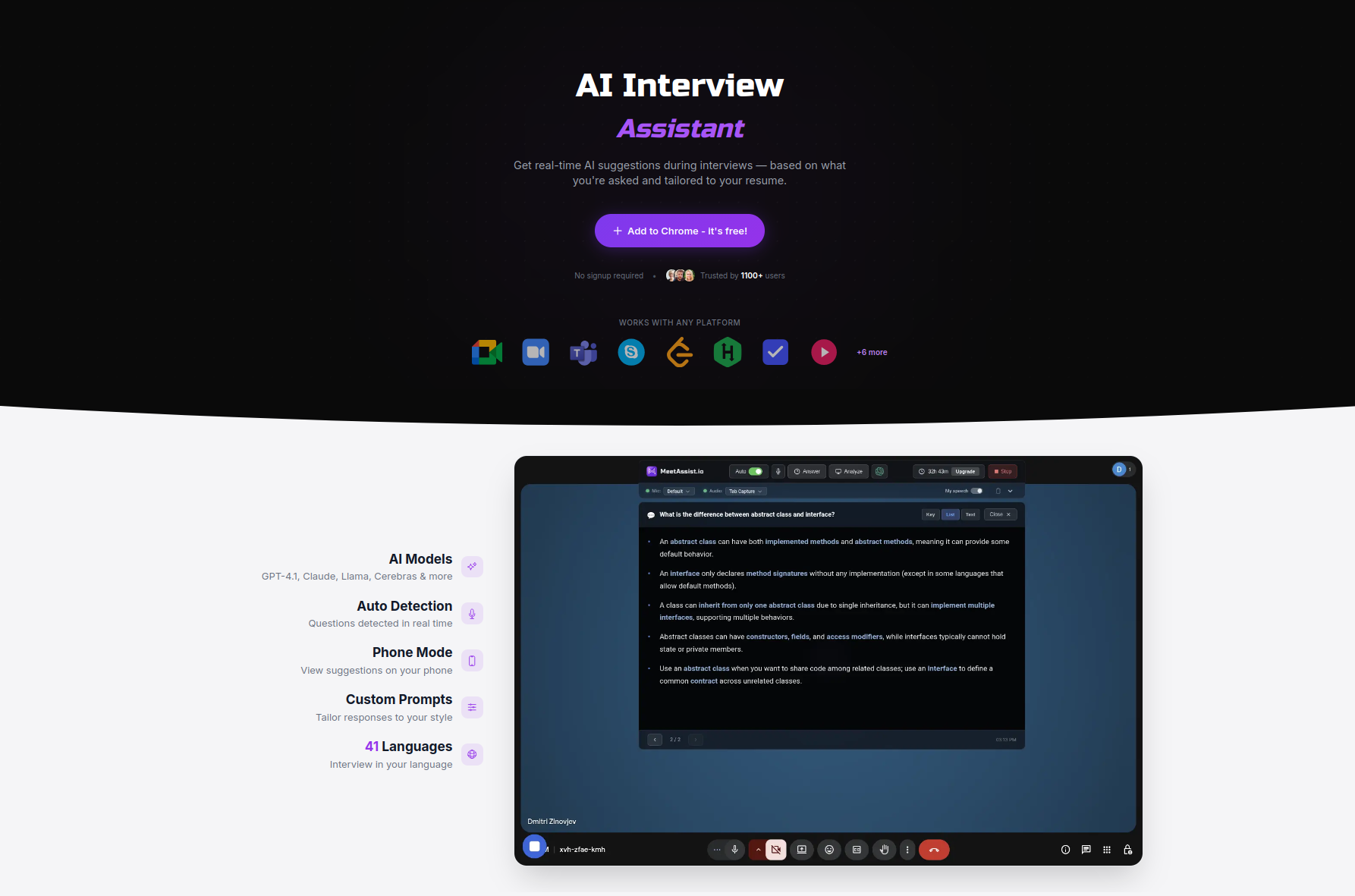
If you’re evaluating different AI interview assistant alternatives, consider how comprehensive support extends beyond just the interview itself to include follow-up strategy and execution. MeetAssist’s Phone Mode keeps your assistance completely invisible during video interviews while capturing important details you can reference later in your thank-you messages. The platform’s resume integration ensures your follow-up content aligns with how you presented yourself during the interview, maintaining consistency that hiring managers value. Explore MeetAssist guides and tutorials to discover how smart technology can streamline your follow-up scheduling, personalization, and content creation, giving you more time to focus on multiple opportunities while maintaining high-quality communication with each potential employer. Visit MeetAssist to see how AI-driven interview support can transform your job search outcomes.
Frequently asked questions
How soon should I send a follow-up after an interview?
Send your thank-you follow-up email within 24 hours of your interview to show professionalism and genuine interest in the role. Early timing helps keep you top of mind with interviewers while the conversation details remain fresh for both of you. Waiting longer than 24 hours risks being forgotten as hiring managers move through dozens of other candidates in competitive job markets.
How many follow-ups are appropriate without seeming desperate?
Cap your follow-ups at 2 to 3 contacts to maintain professionalism and avoid negative impressions that can hurt your chances. Your first follow-up should be a thank-you within 24 hours, your second can check on timeline updates after one week or their stated decision date, and a third might be a final expression of continued interest if you still haven’t heard back. Further attempts risk appearing desperate or pushy, which damages your candidacy rather than helping it.
What should I include in a post-interview follow-up email?
Include a thank-you message expressing appreciation for their time, a brief recap of your interest and fit for the role, and any clarification or additional information they requested during the interview. Keep the tone polite and professional while tailoring specific references to your conversation, such as mentioning projects they discussed or challenges they shared about the position. Aim for three to four concise paragraphs that are easy to read quickly and demonstrate you were fully engaged during the interview.
Is it better to follow up by email or LinkedIn?
Email remains the most professional and preferred follow-up method across most industries and company sizes because it provides documentation and respects professional boundaries naturally. LinkedIn can complement email by maintaining professional visibility and networking presence if done carefully, but should not replace email as your primary follow-up channel. Use LinkedIn to connect after sending your email thank-you, then share relevant industry content that demonstrates your ongoing expertise and engagement with topics related to the role. For more guidance on professional communication approaches, review soft skills interview tips that extend beyond the interview itself.
Recommended
- Interview Tips Articles – MeetAssist Blog | MeetAssist
- Job Interview Answer Strategies 2026: Boost Success 35% – MeetAssist | MeetAssist
- Video Interview Success: 80% Fewer Tech Failures Guaranteed – MeetAssist | MeetAssist
- How to Answer Behavioral Questions for Interview Success – MeetAssist | MeetAssist